

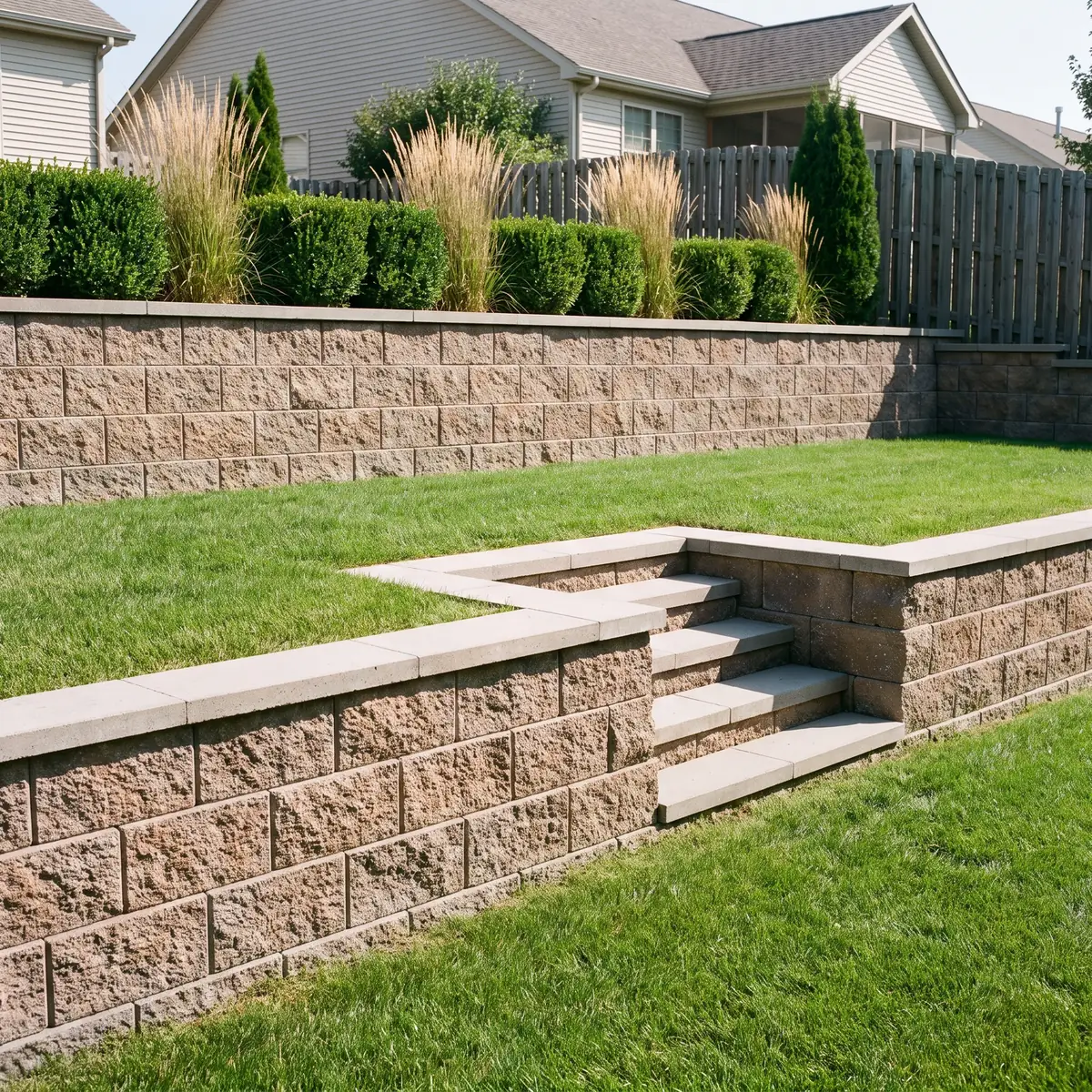



RK Preferred builds retaining walls in South Charlotte, from garden walls to large walls that hold back a cut slope on a new lot. Every wall gets a compacted gravel base and drainage behind it, because water is what pushes walls over.
A Charlotte wall, course by course
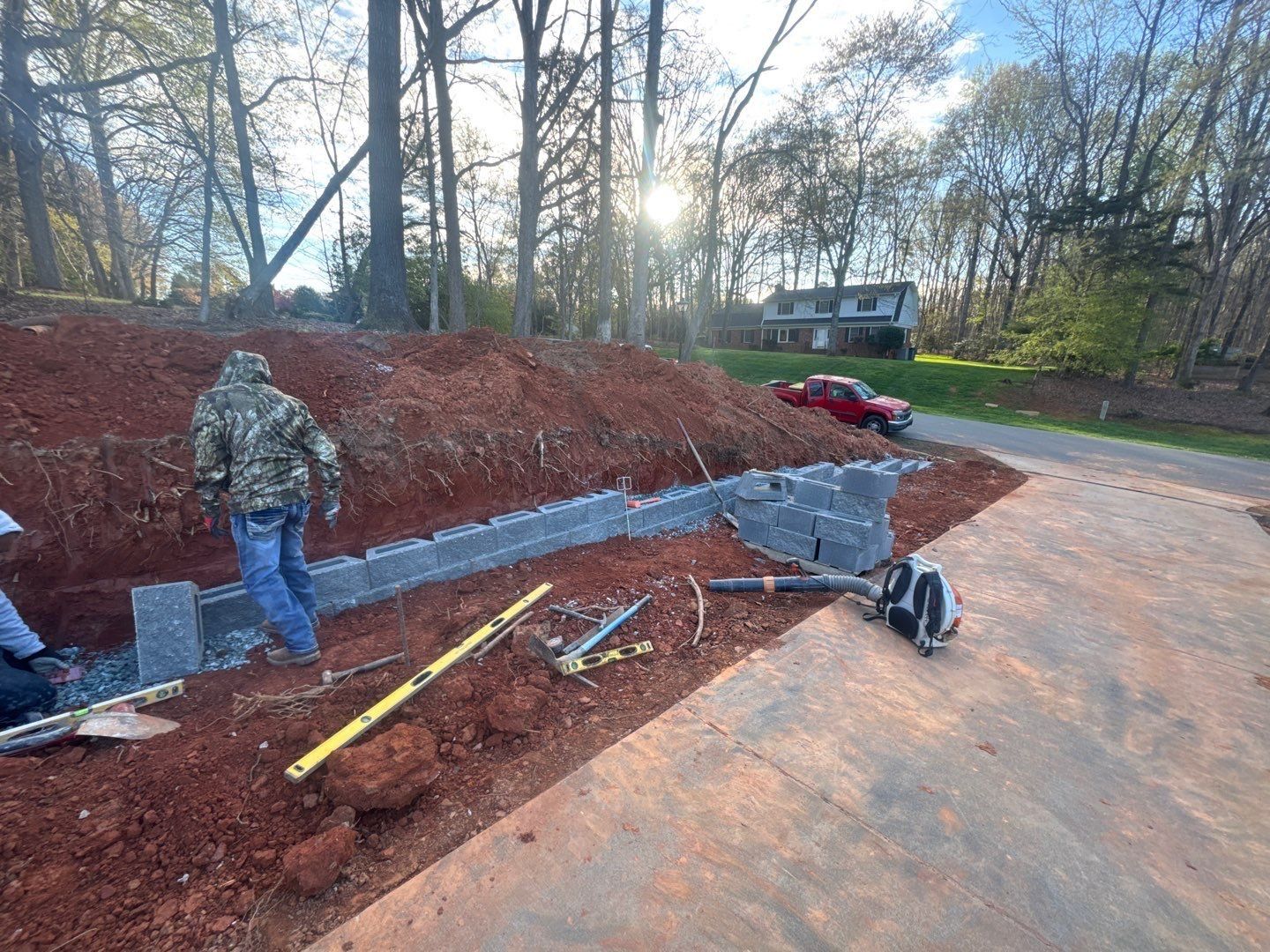
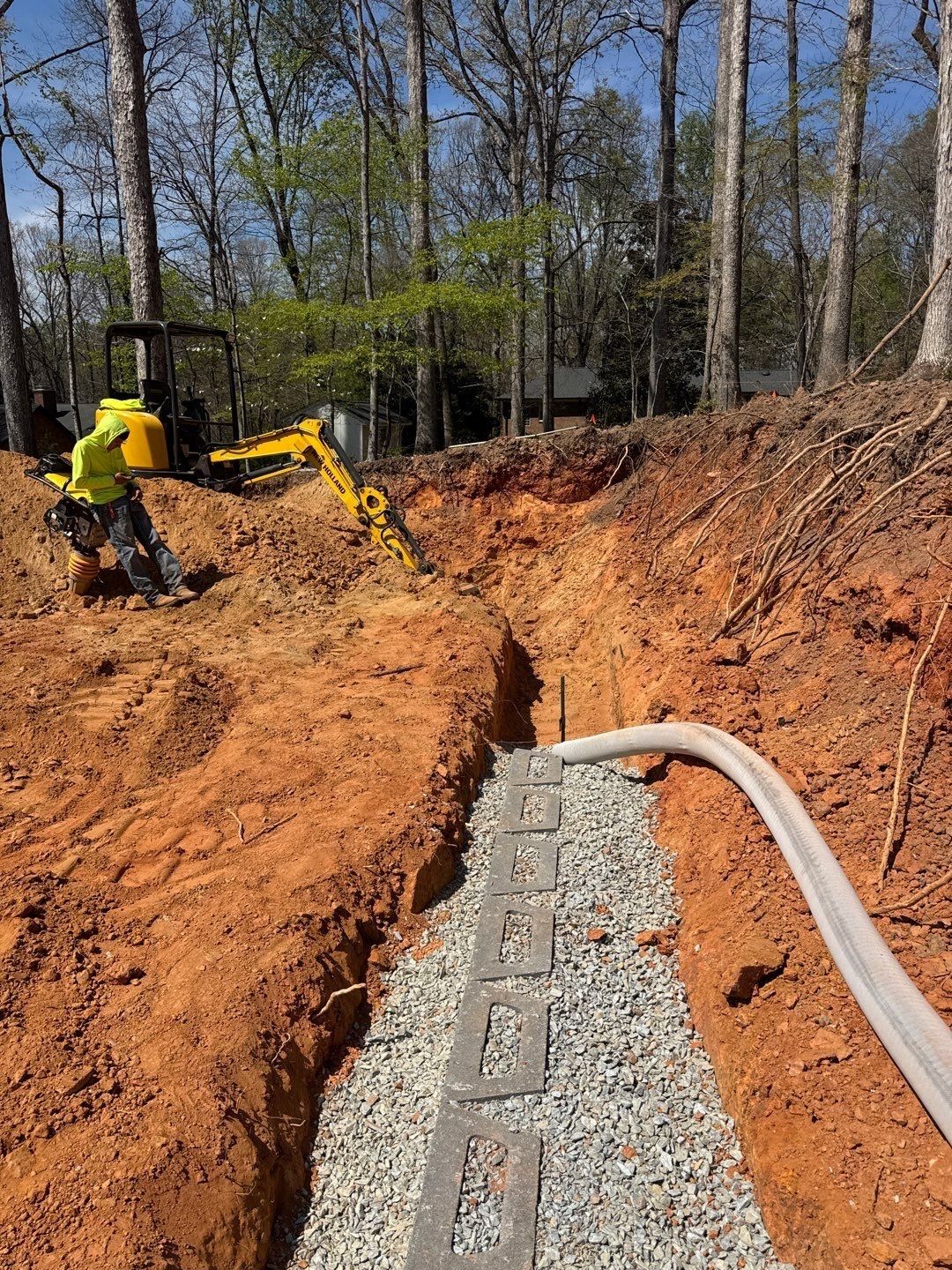
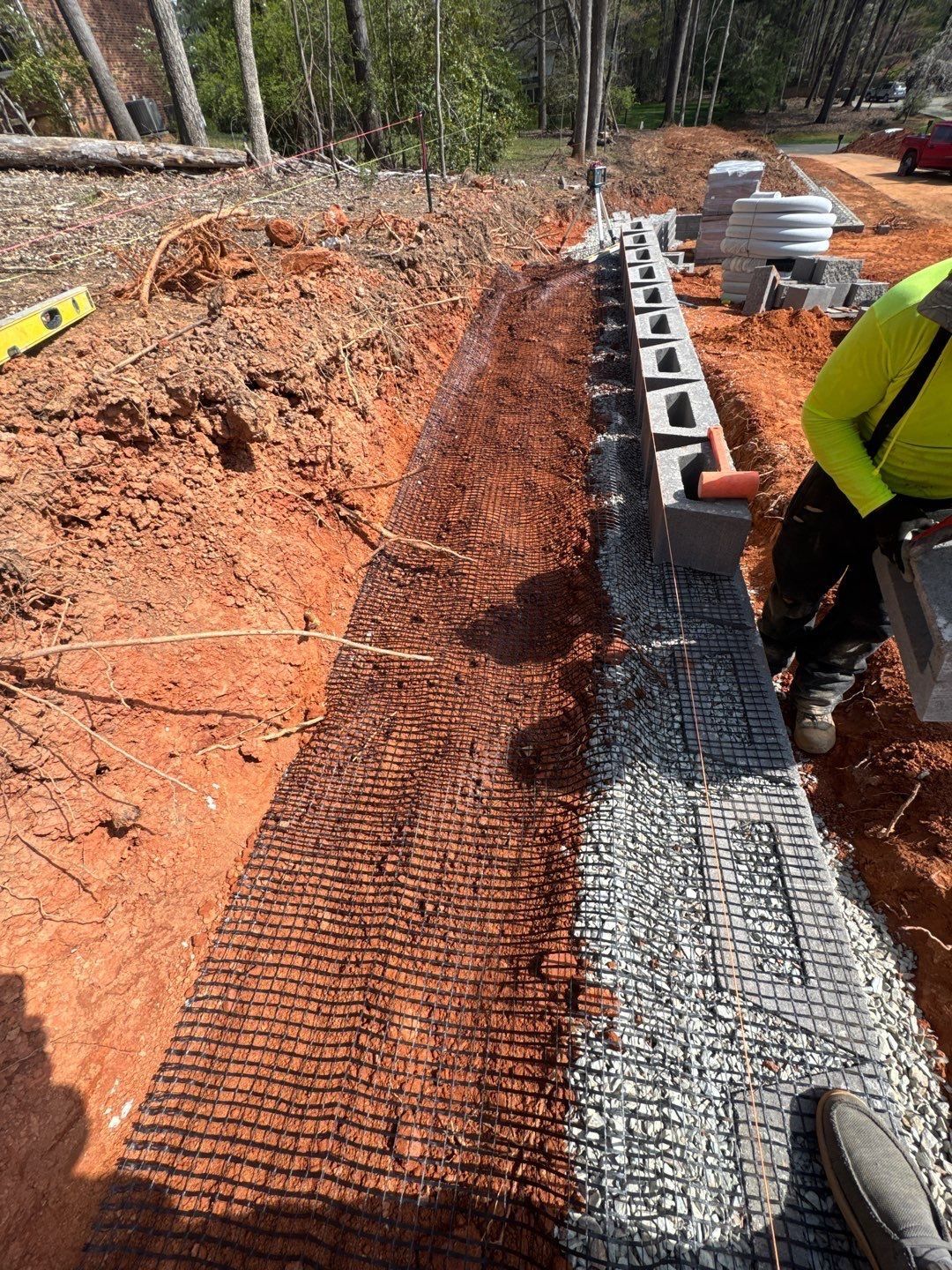
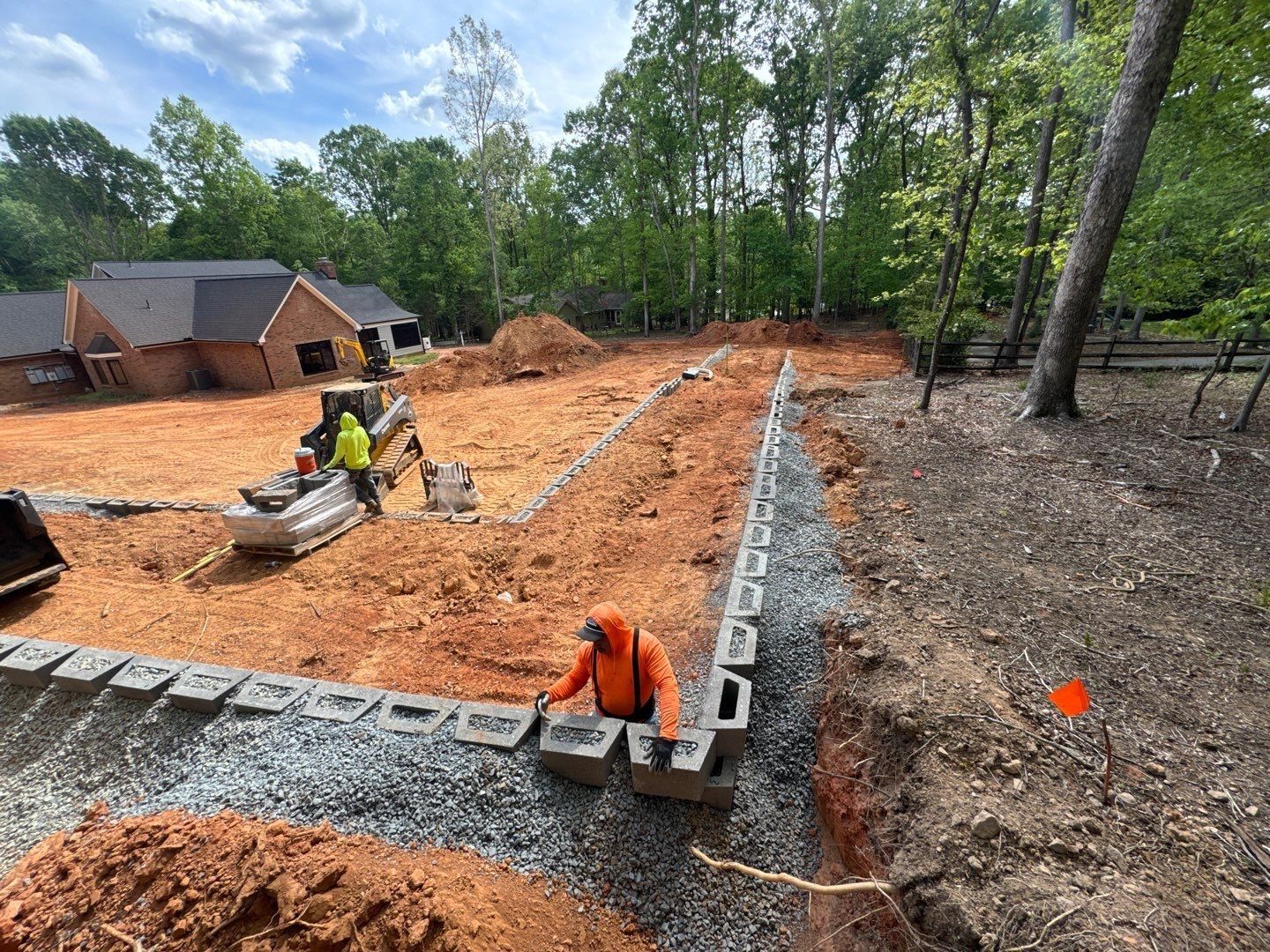
One recent Charlotte job is a long retaining wall on a sloped, newly cleared lot, built in stages over several weeks. The photos show what goes into a wall that lasts, most of which ends up buried.
How we build a retaining wall
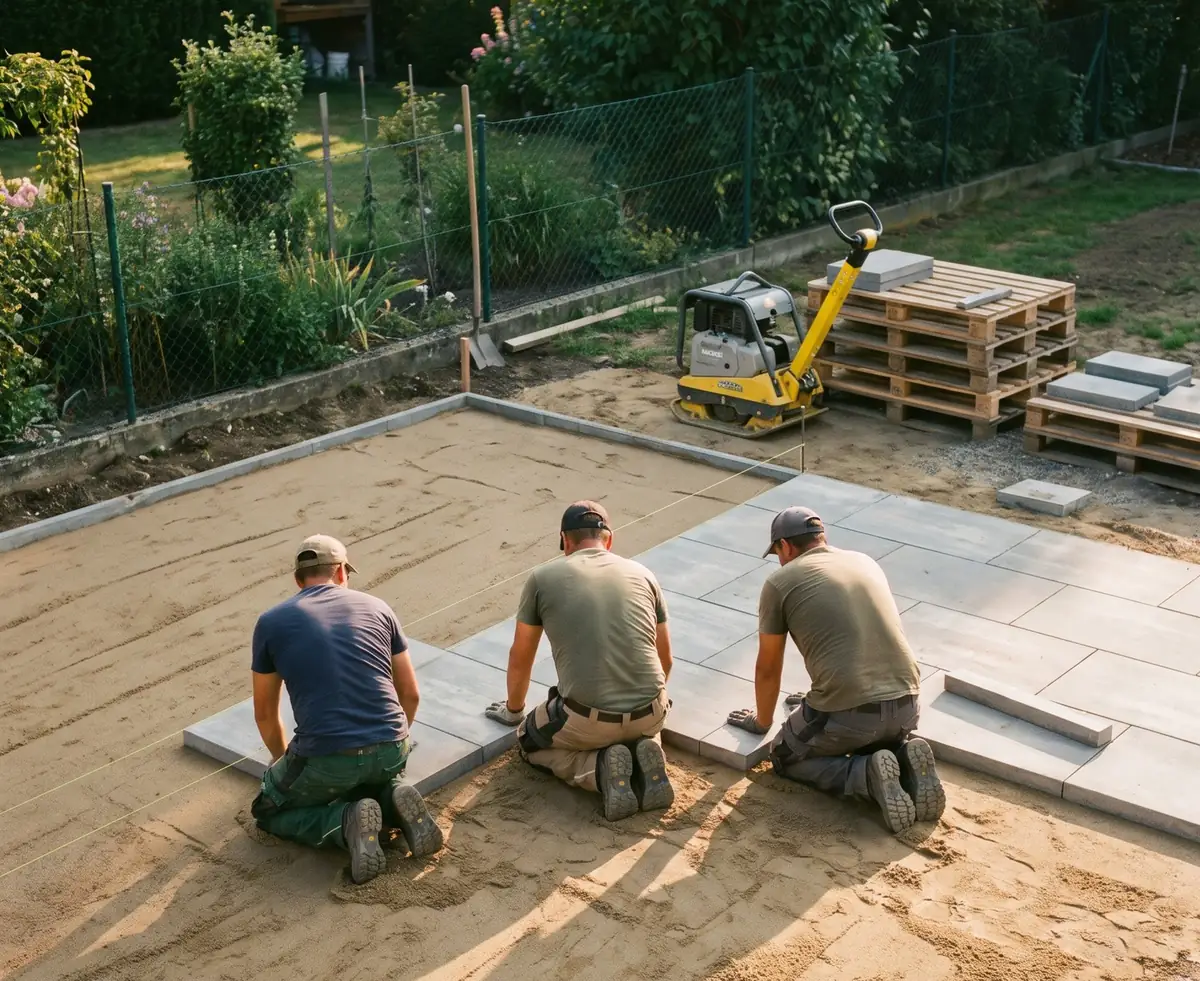
The crew excavates for the footing and lays a gravel base, compacted in lifts to at least 4 to 6 inches or deeper depending on the wall. The first course is set level along the whole run, because every course above follows it. Drain pipe and gravel go in behind the wall as it rises, then compacted backfill.
Taller walls get geogrid: sheets of reinforcement laid back into the slope between courses, tying the wall into the soil behind it.
Block we use
Retaining walls are Anchor Wall or Belgard. For seat walls and garden walls we most often use Belgard Weston Stone, plus Techo-Bloc Raffinato and Tremron Stonegate.
Questions from Charlotte homeowners
Why do retaining walls fail?
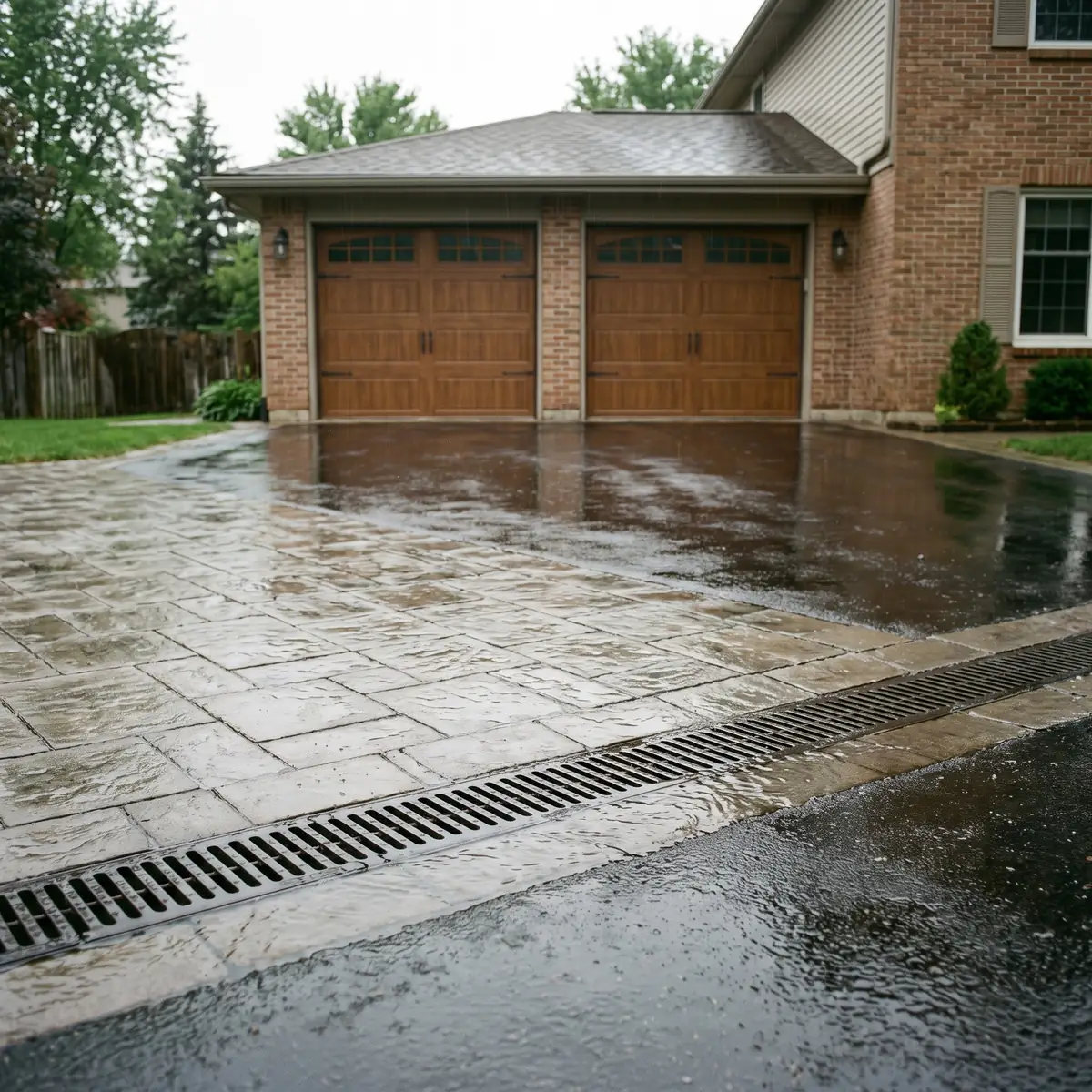
Most fail from water building up behind them or a base that wasn’t compacted. That’s why every wall we build gets a compacted gravel base, drainage and compacted backfill.
Can you add steps into a wall?
Yes. Steps and caps are planned with the wall at the site visit.
Is South Charlotte in your service area?
Yes. Ballantyne and South Charlotte are about 10 miles from our Indian Trail yard, in Mecklenburg County.