


Where a pergola goes
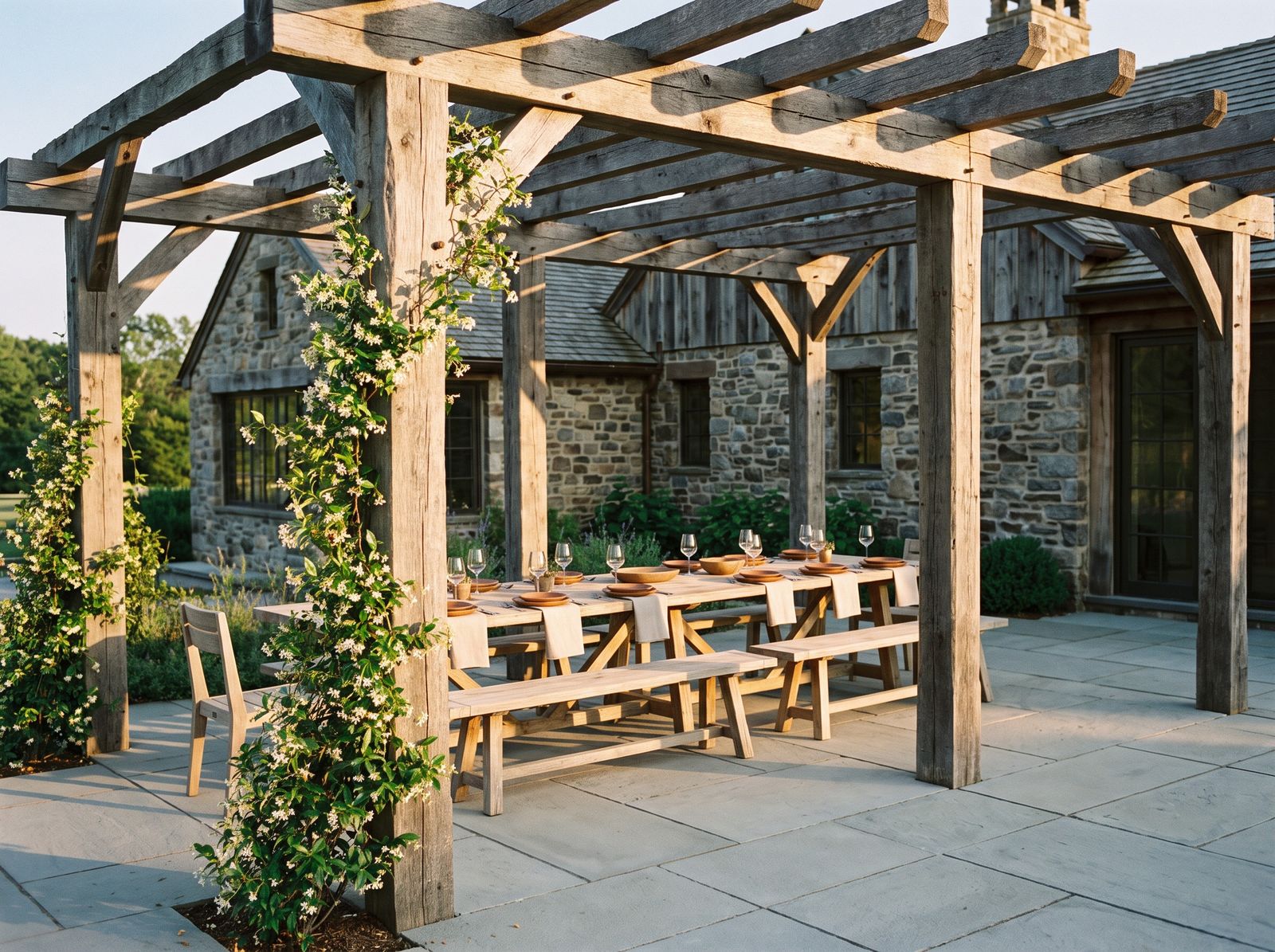
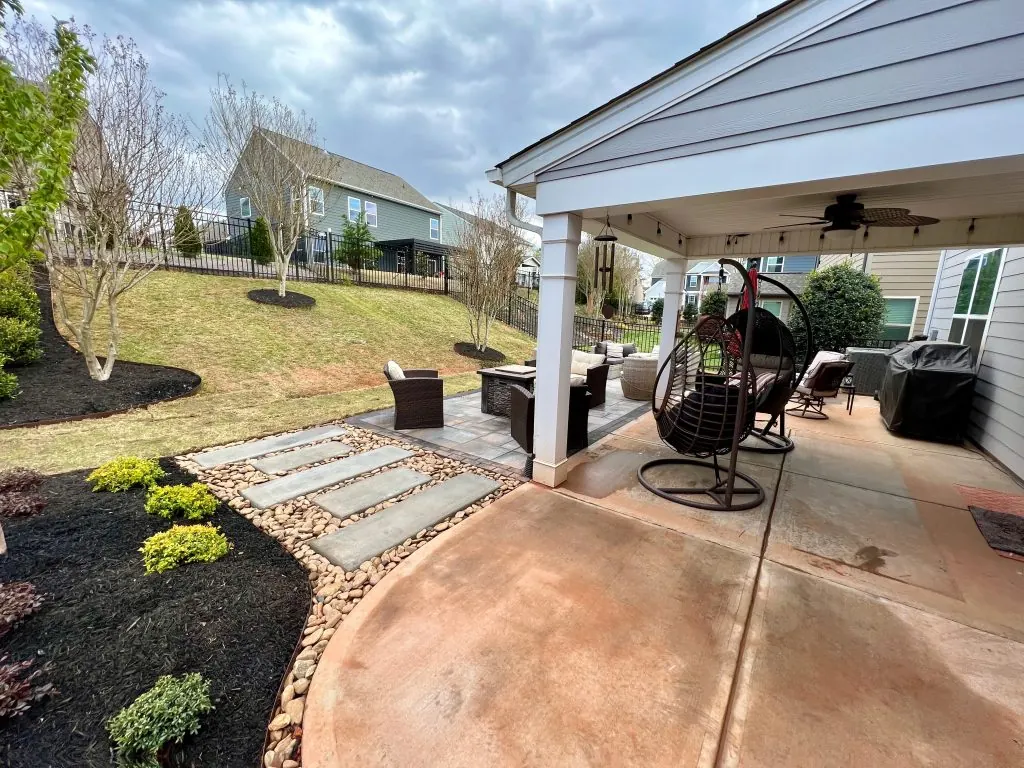
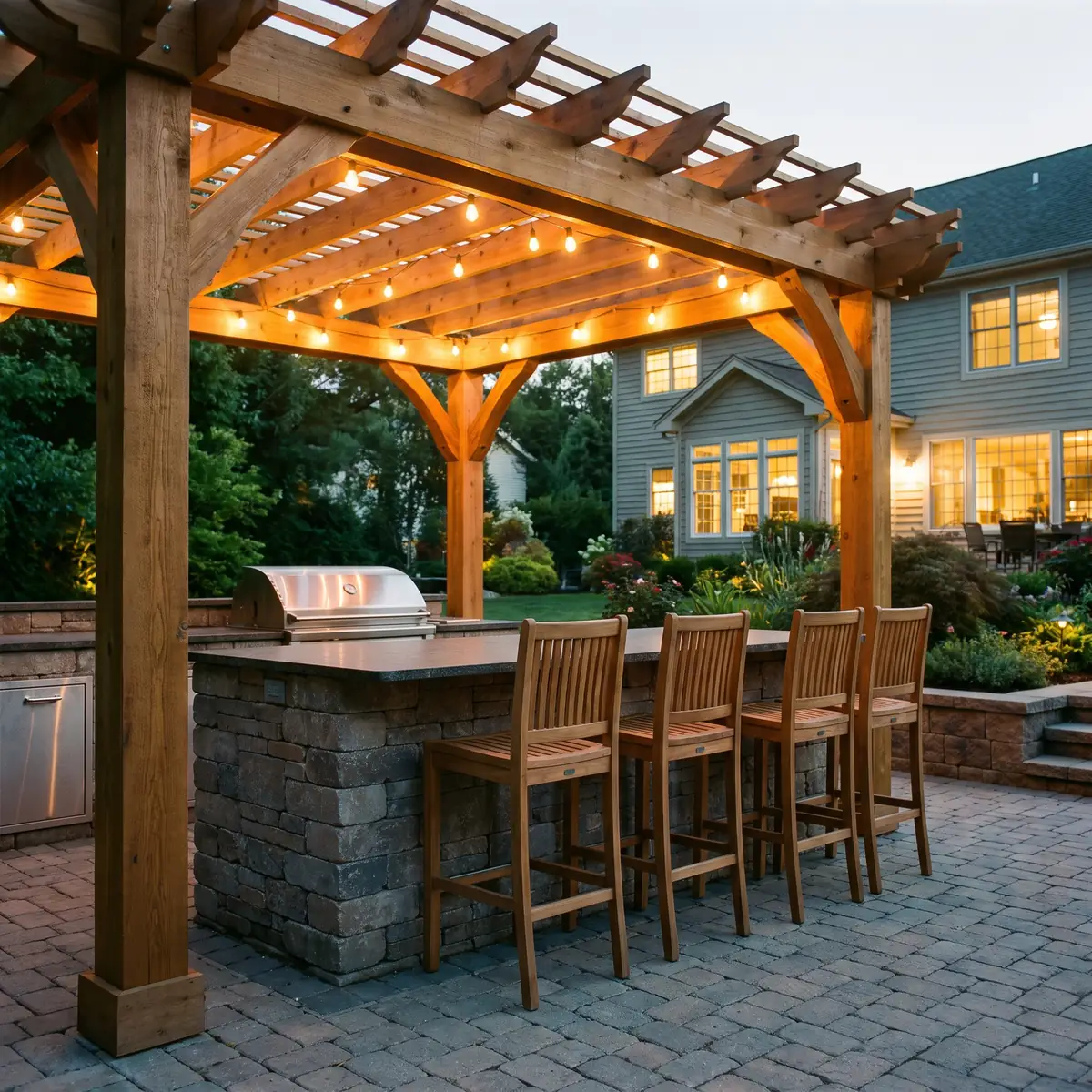
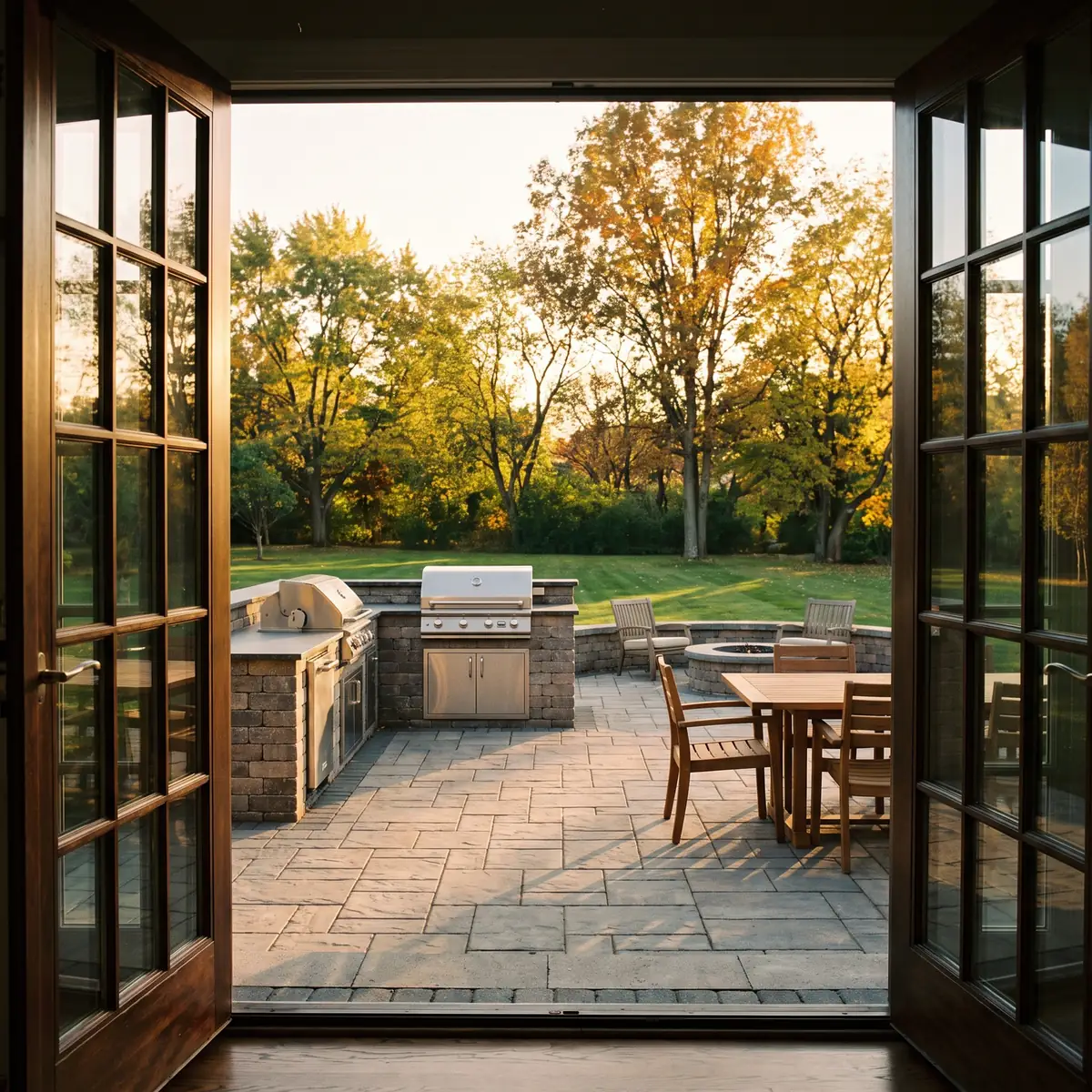
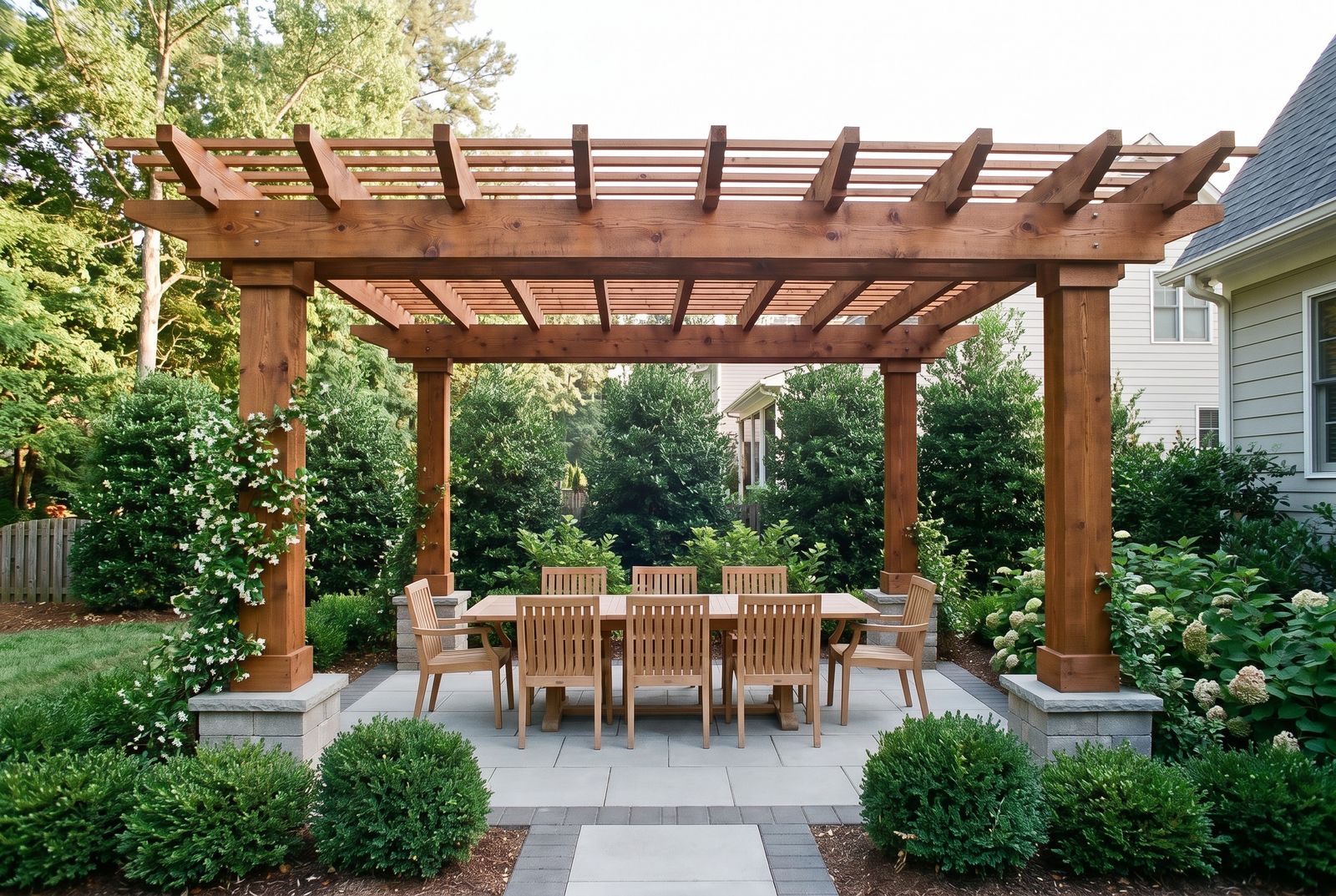
The best spot is usually where people already sit: over the dining table, the outdoor kitchen or a lounge area off the back door. On many lots the afternoon sun comes over the back of the house, so the pergola is placed to shade the table at the hours it gets used.
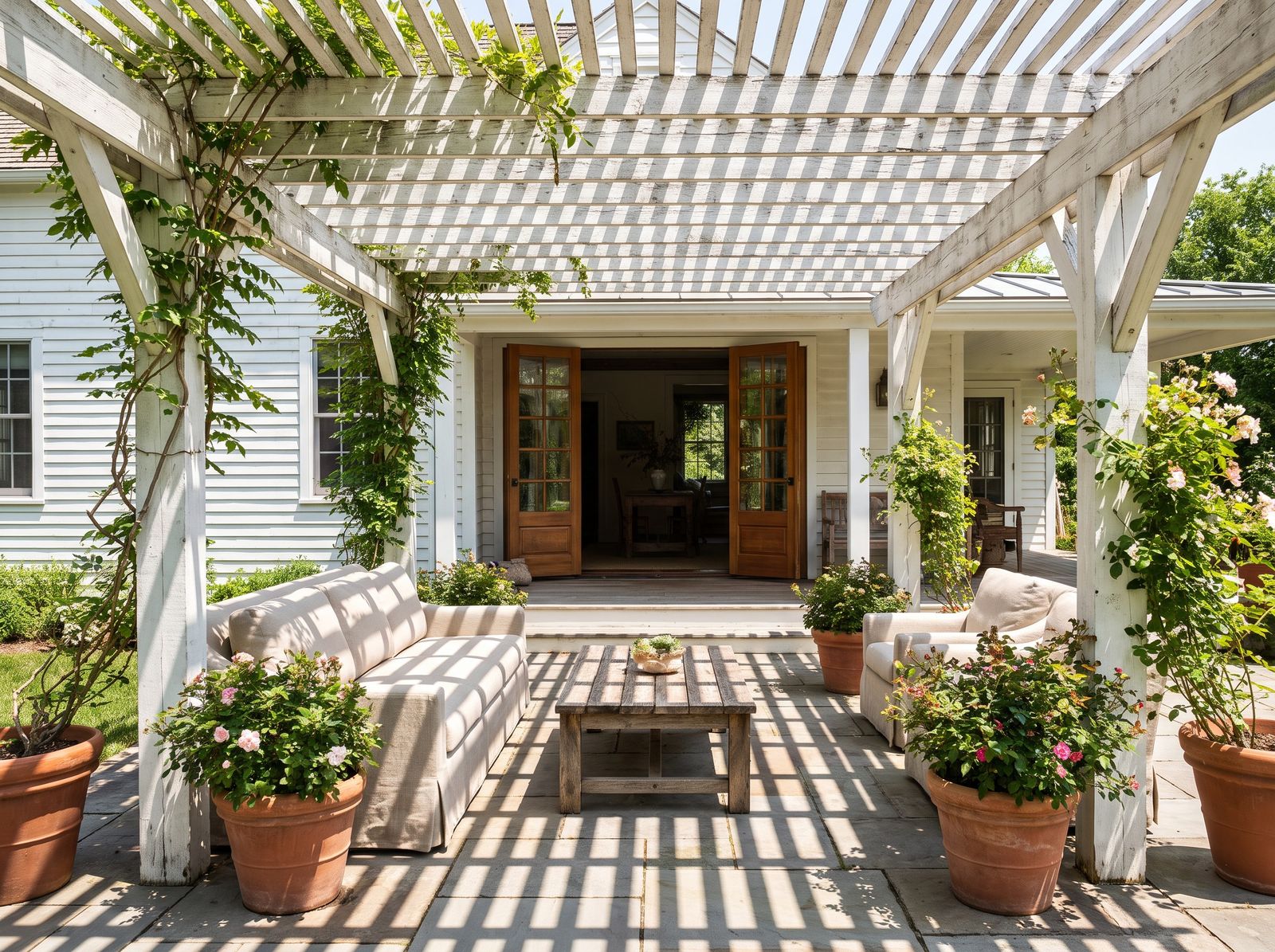
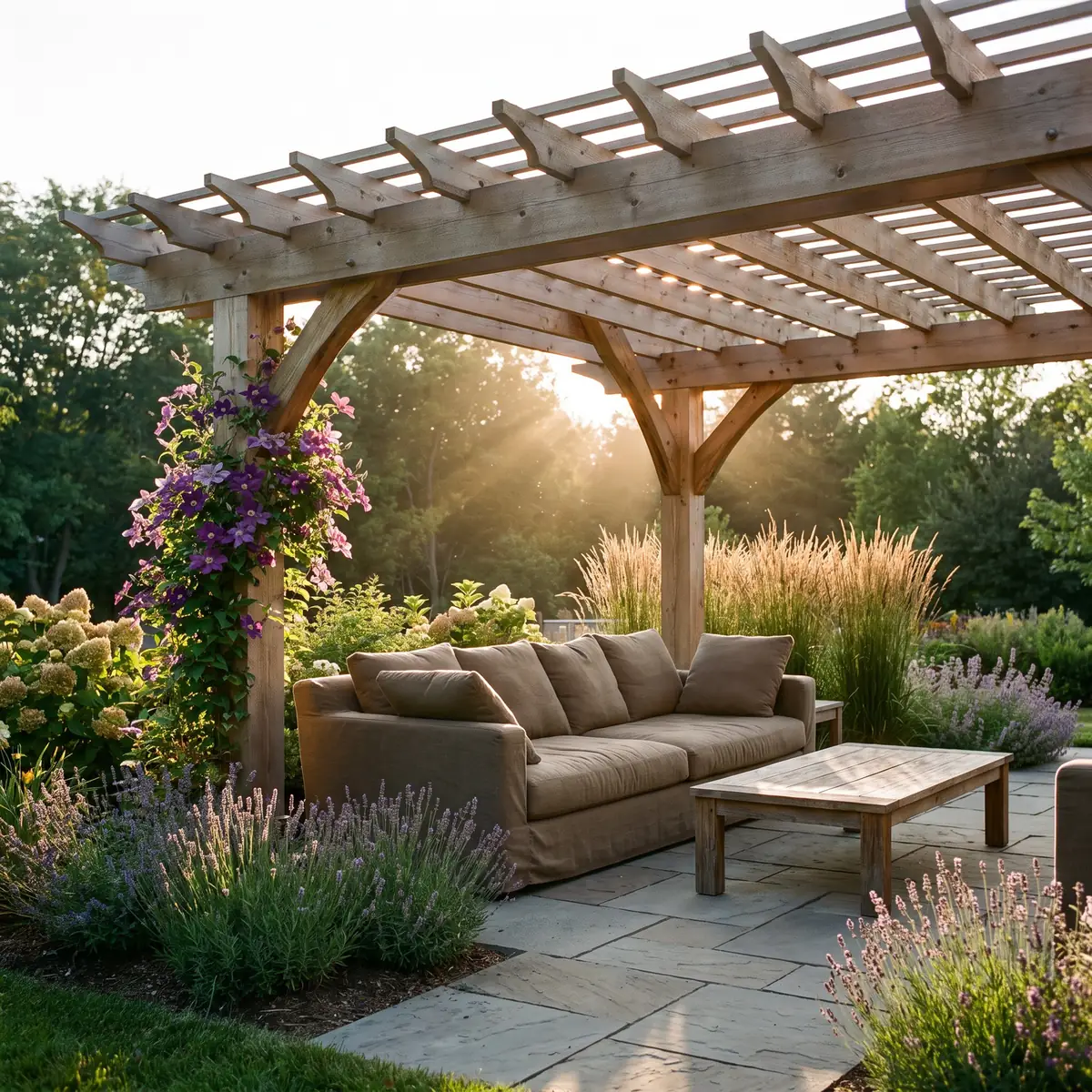
An open pergola gives filtered shade. Tighter rafter spacing gives more of it, and a climbing vine fills it in over a few seasons.
Pergolas as part of the patio
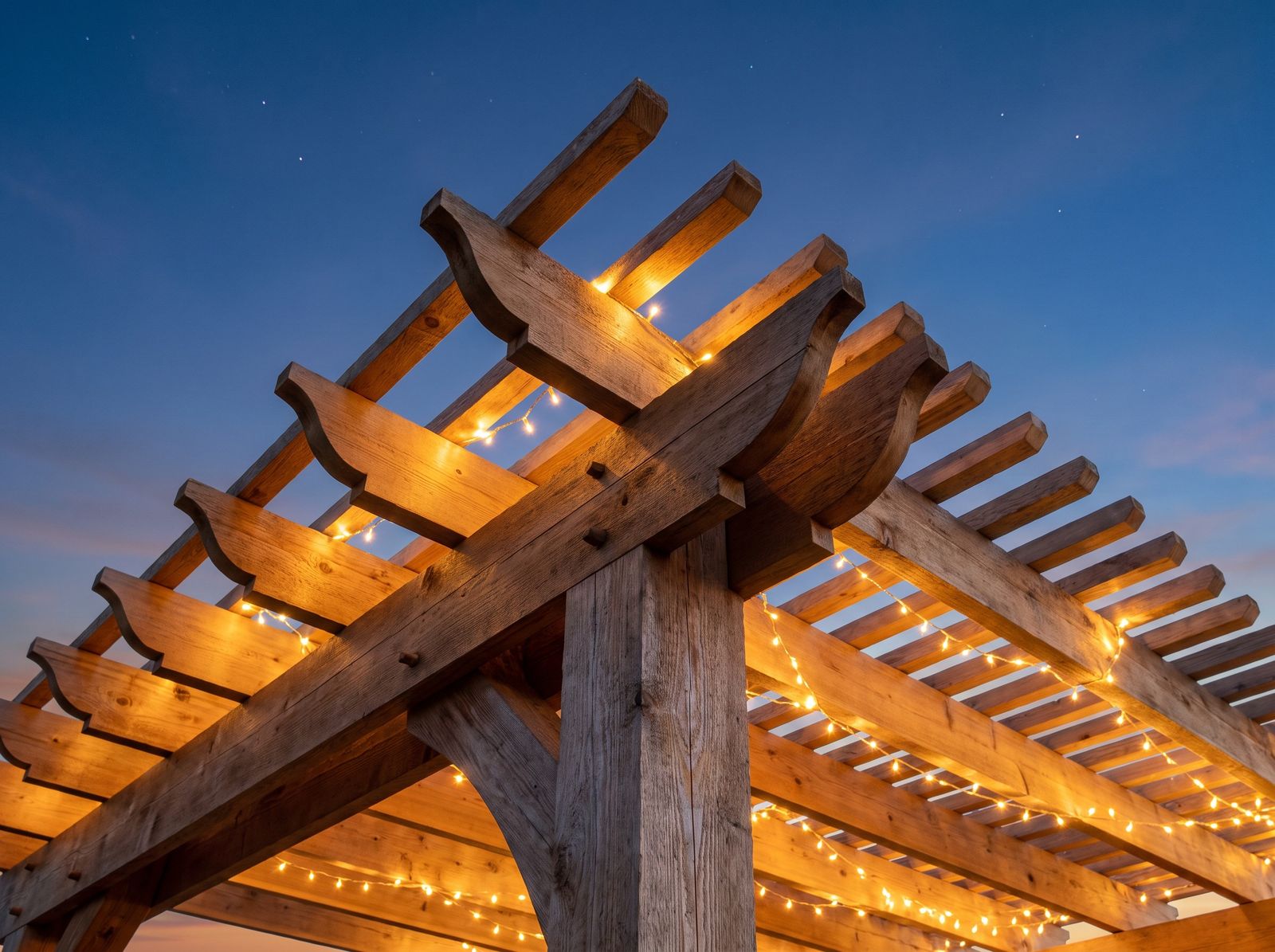
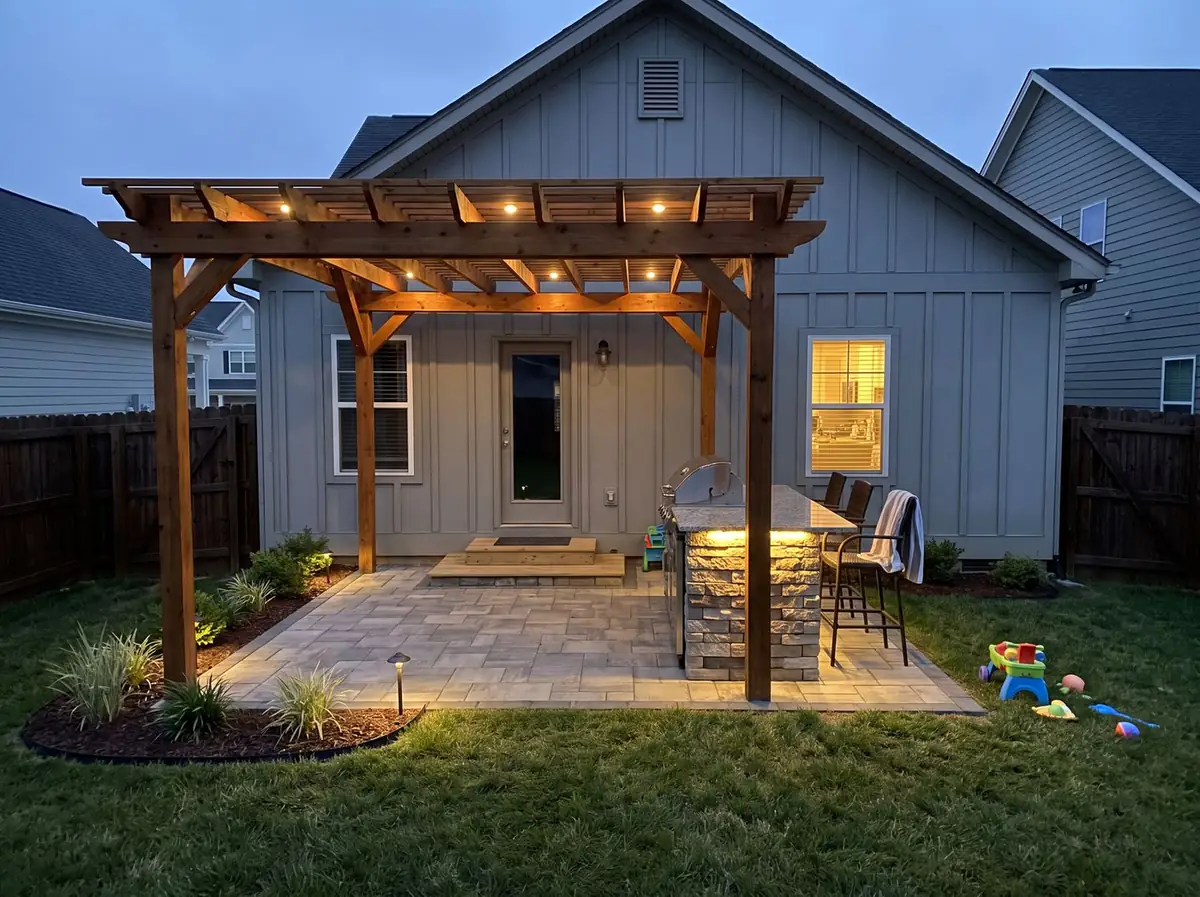
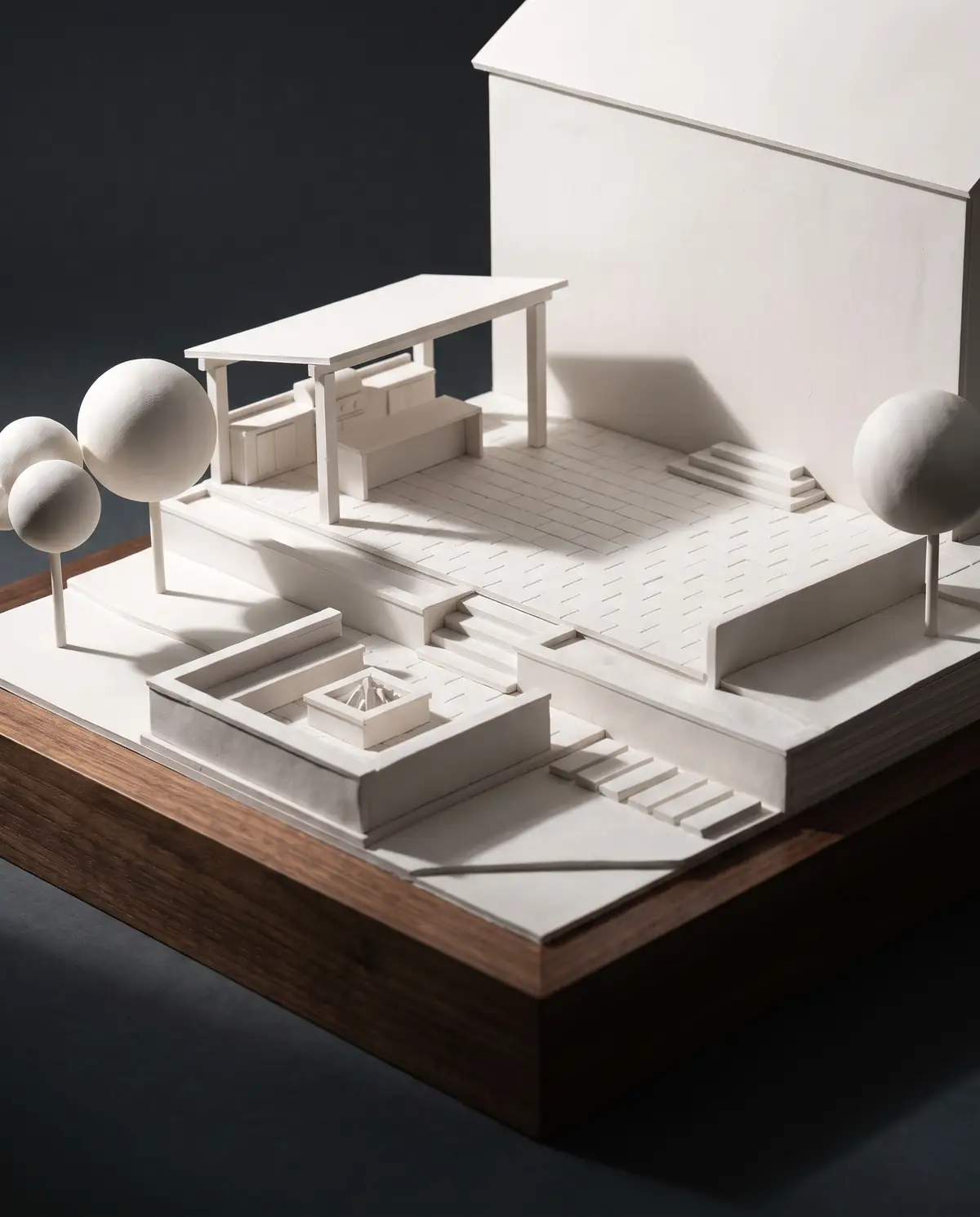
A pergola works best designed with the patio, kitchen and lighting around it. The posts land on proper footings at the patio edge or on joints, the beams line up with the house, and the downlights are wired before the structure is finished.
Why a pergola
Summer heat and humidity around Charlotte cut afternoon time outside short. A well-placed pergola shades the table or the kitchen and makes the space usable for more of the day, and it gives the yard a finished architectural element.
Materials
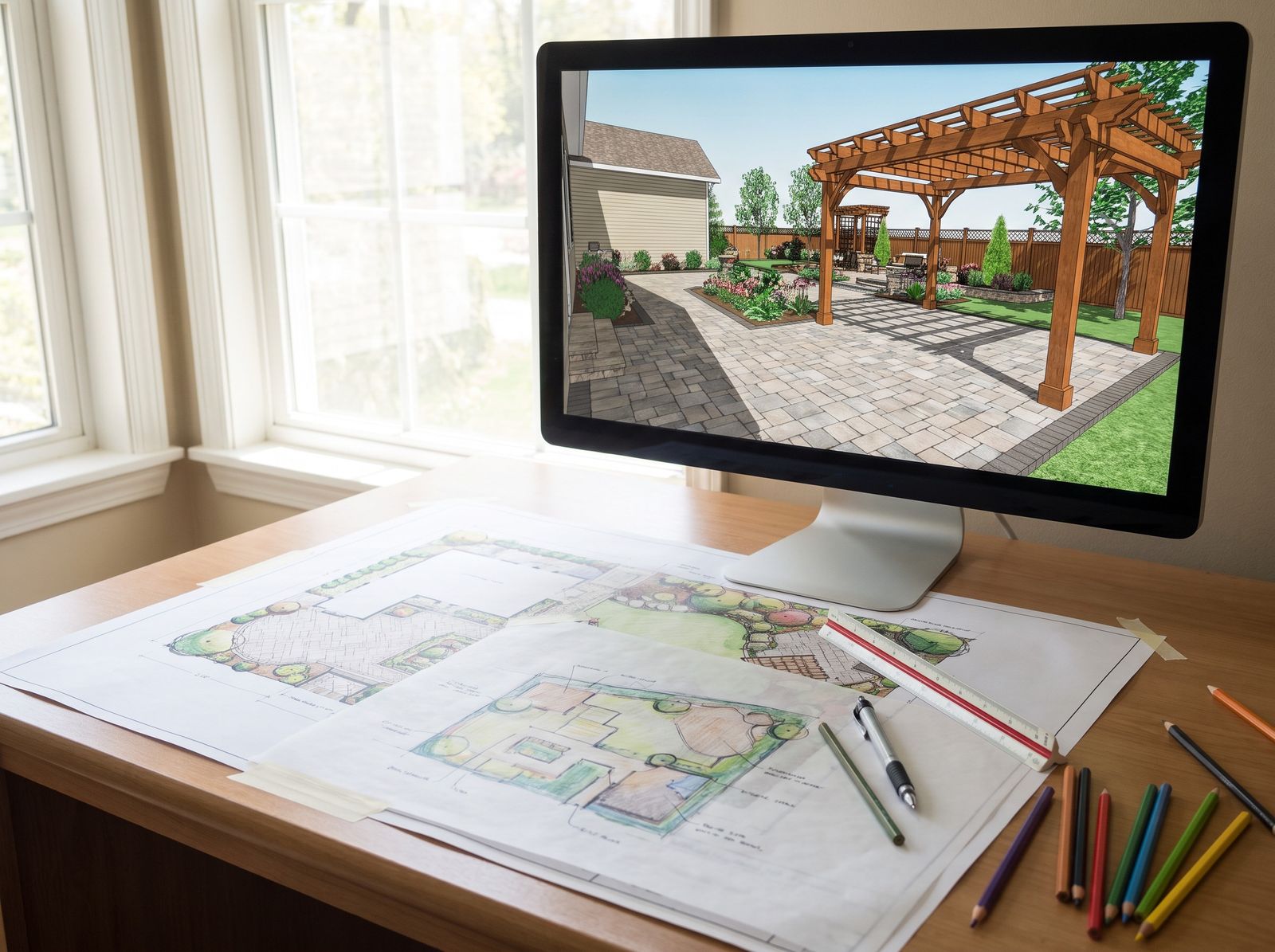
We build pergolas in cedar, aluminum and composite. On a design project, the 3D rendering shows how the structure sits against your house and patio, and what proportions work, before anything is built.
Sizing and anchoring
Posts and beams are sized to the span and anchored to footings. We line the posts up with the patio joints and the house so the pergola looks planned, and wire downlights in during construction.
Pergola materials
| Material | Look | Upkeep |
|---|---|---|
| Cedar | Warm natural wood | Weathers to gray, or stain to keep the color |
| Aluminum | Clean, modern lines | Low upkeep |
| Composite | Wood look | Low upkeep |