














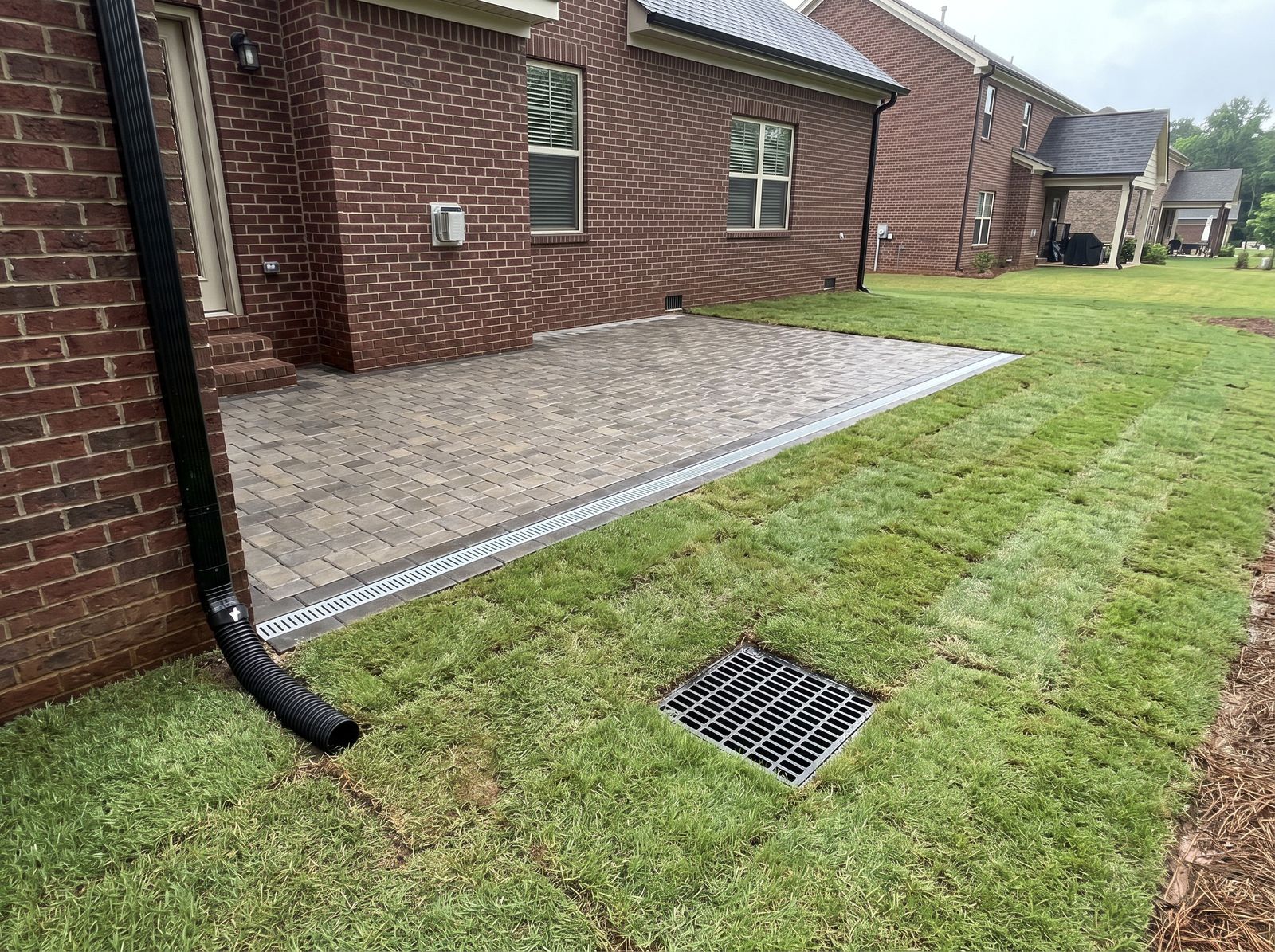
Signs of a drainage problem
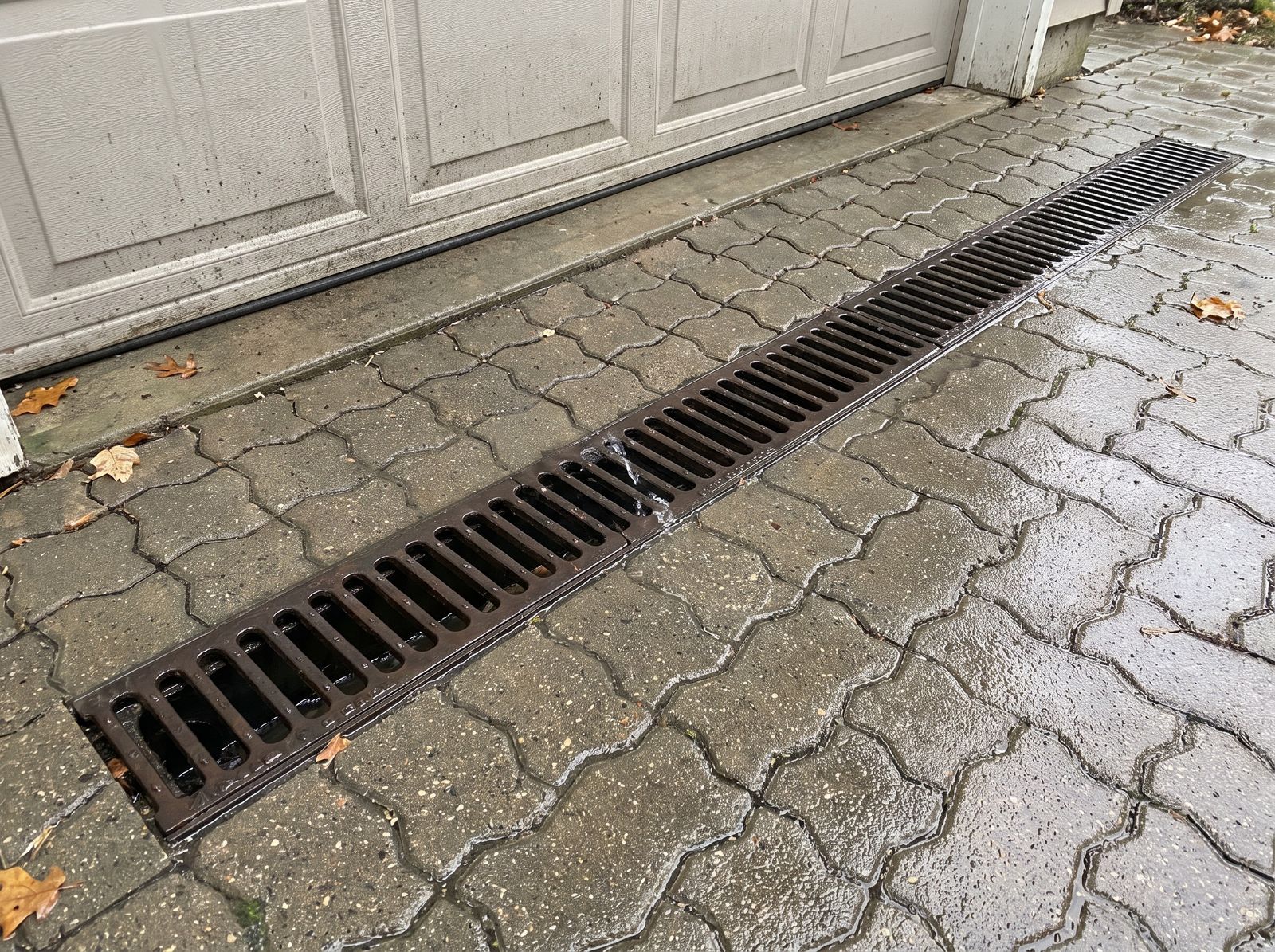
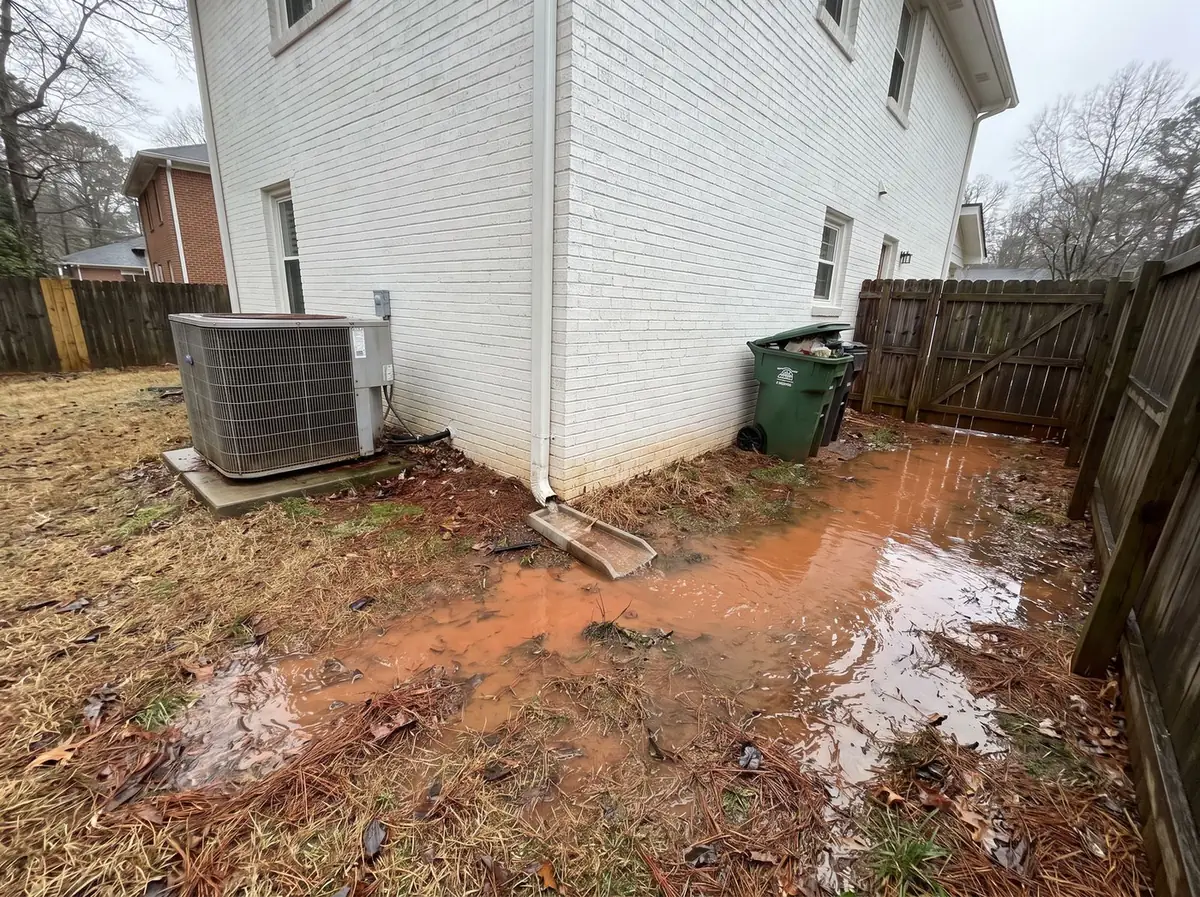
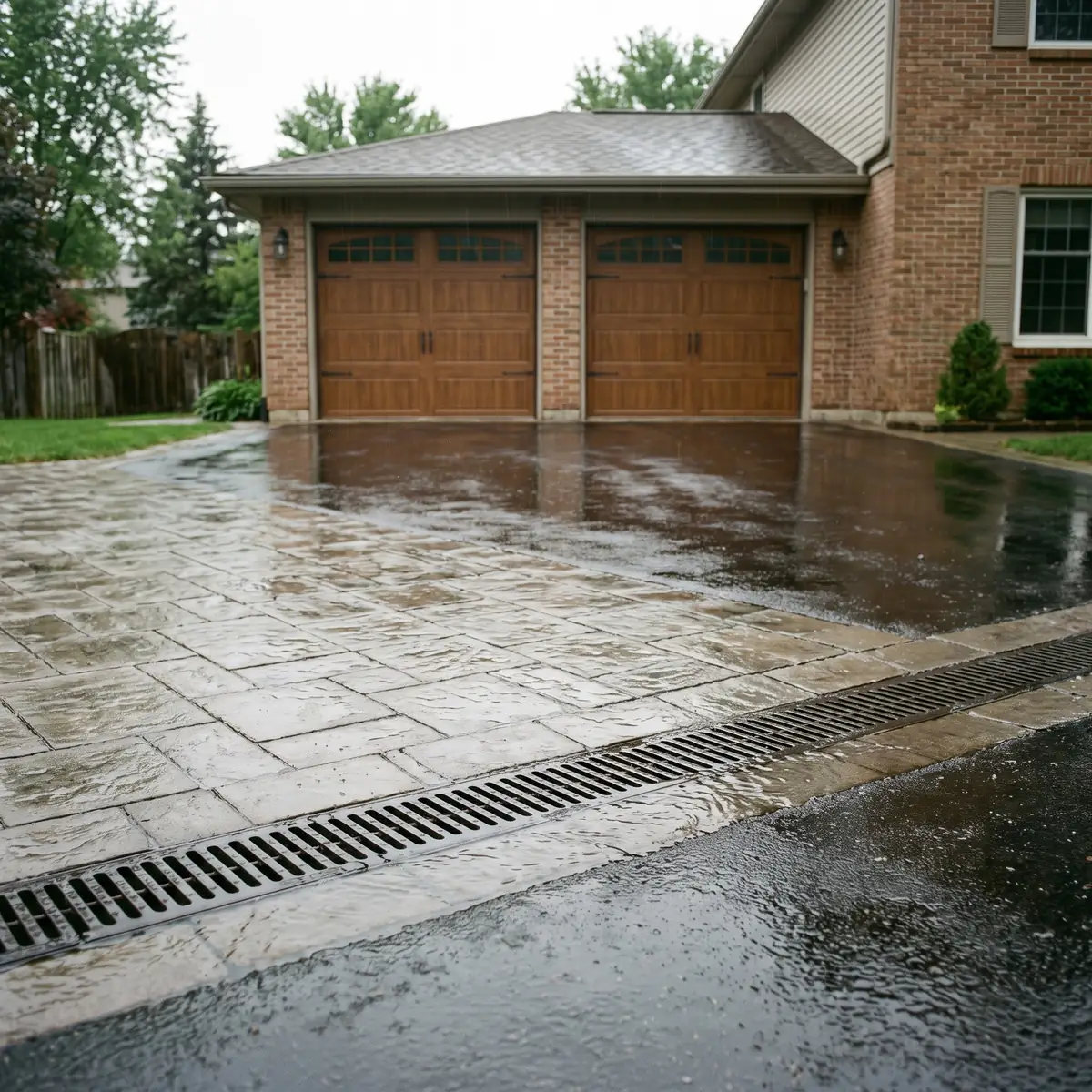
Spongy spots or standing water in the lawn after rain or watering, beds that stay wet, mulch that washes out onto the walk, and water collecting near the foundation all point to water that isn’t moving where it should.
Where the water comes from
Most yard water problems start at the gutters: downspouts empty onto grass or into a bed where water pools. Others come from a yard graded toward the house, or from soil around a newer foundation that settled.
How each fix works
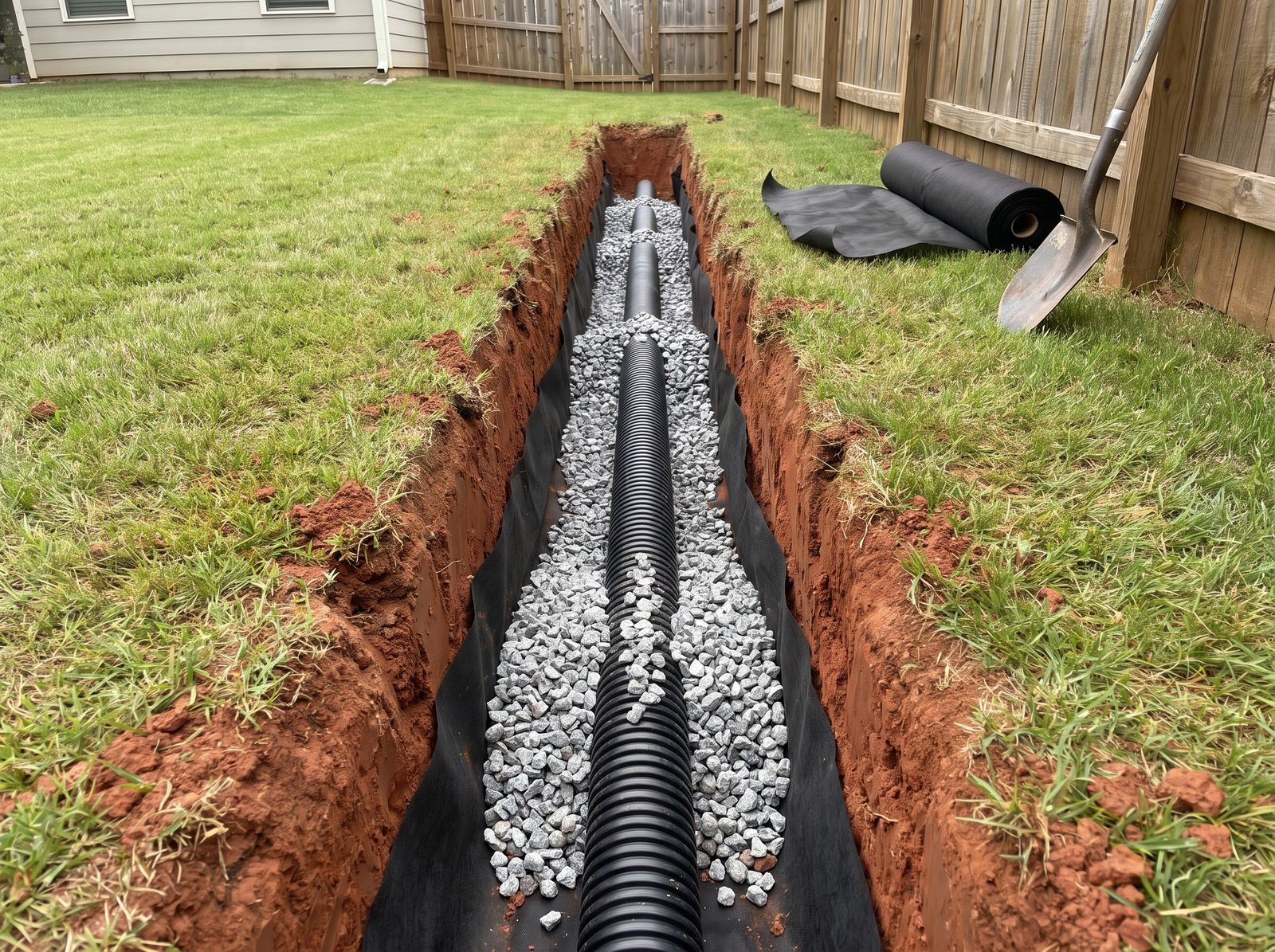
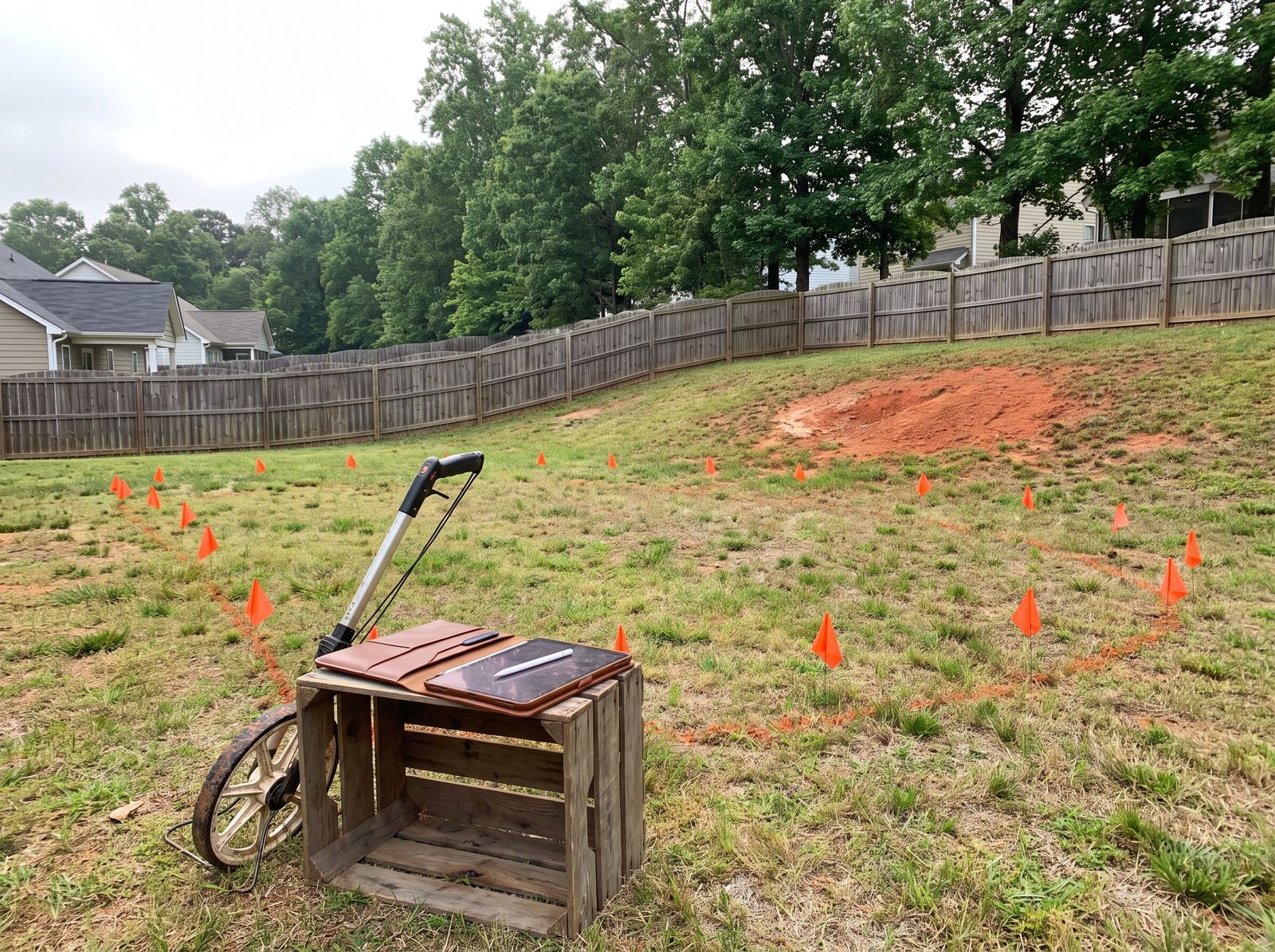
A French drain is perforated pipe in a gravel-filled trench that carries water to a set spot. Our crews often use laser-guided equipment to hold the grade along the whole run.
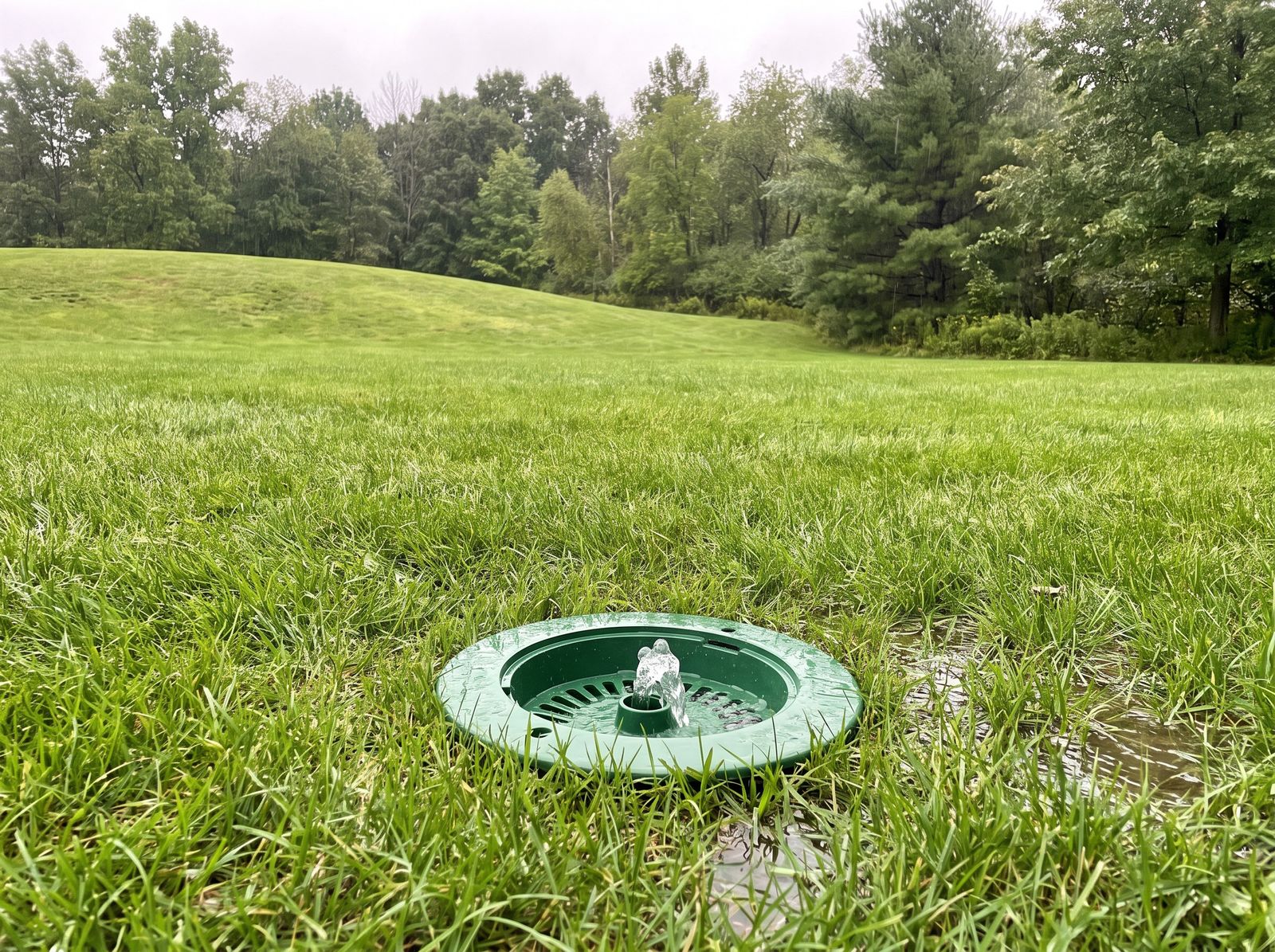
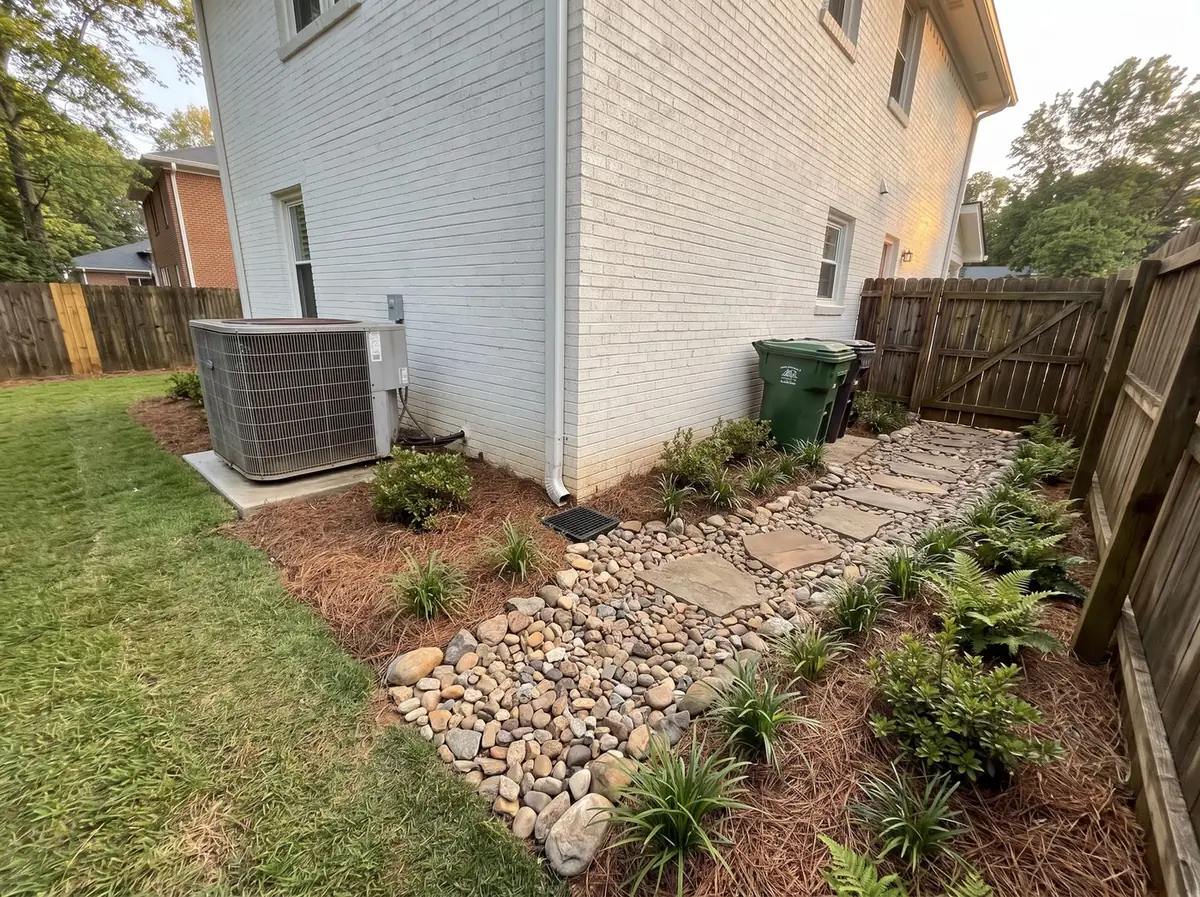
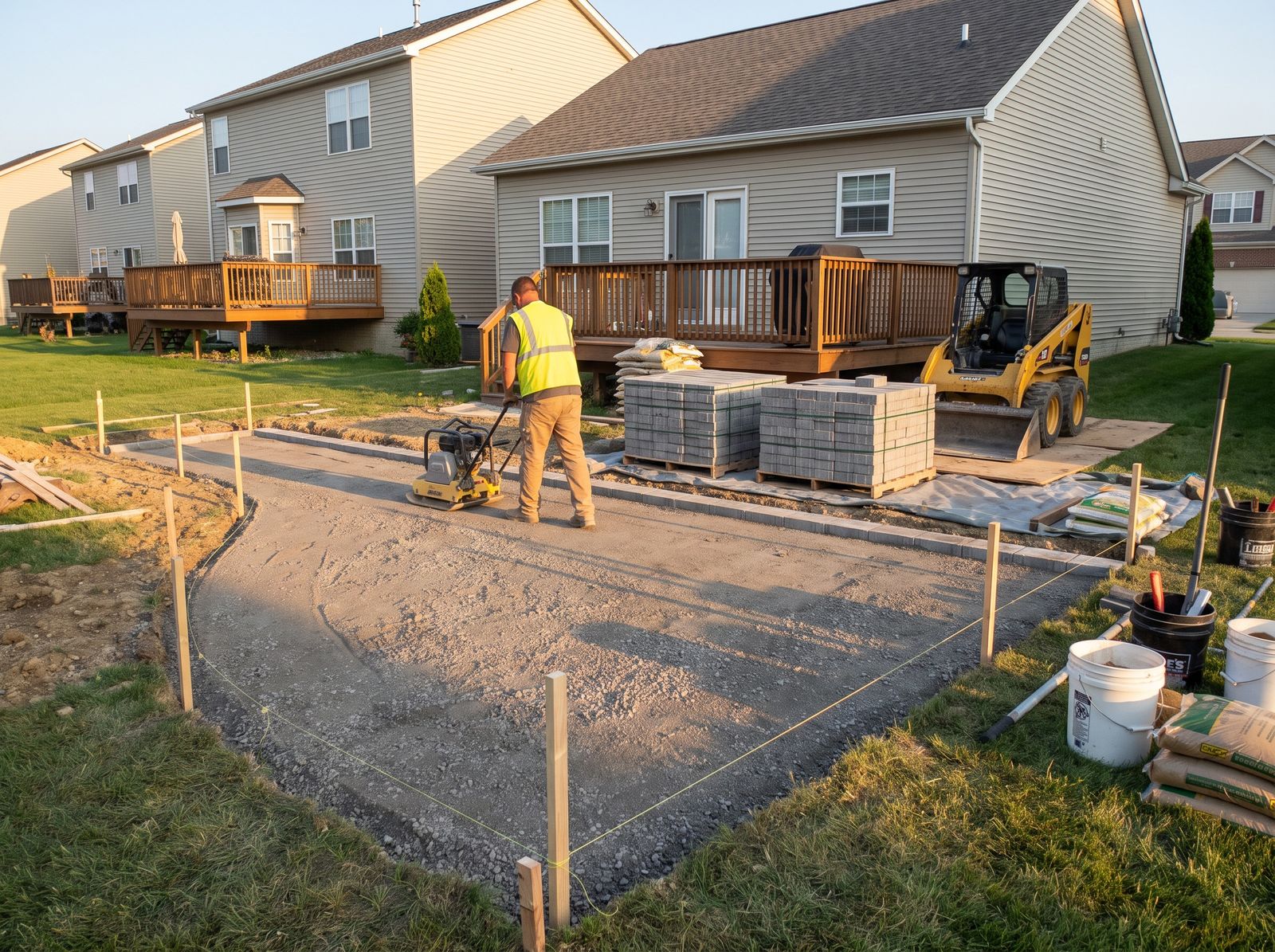
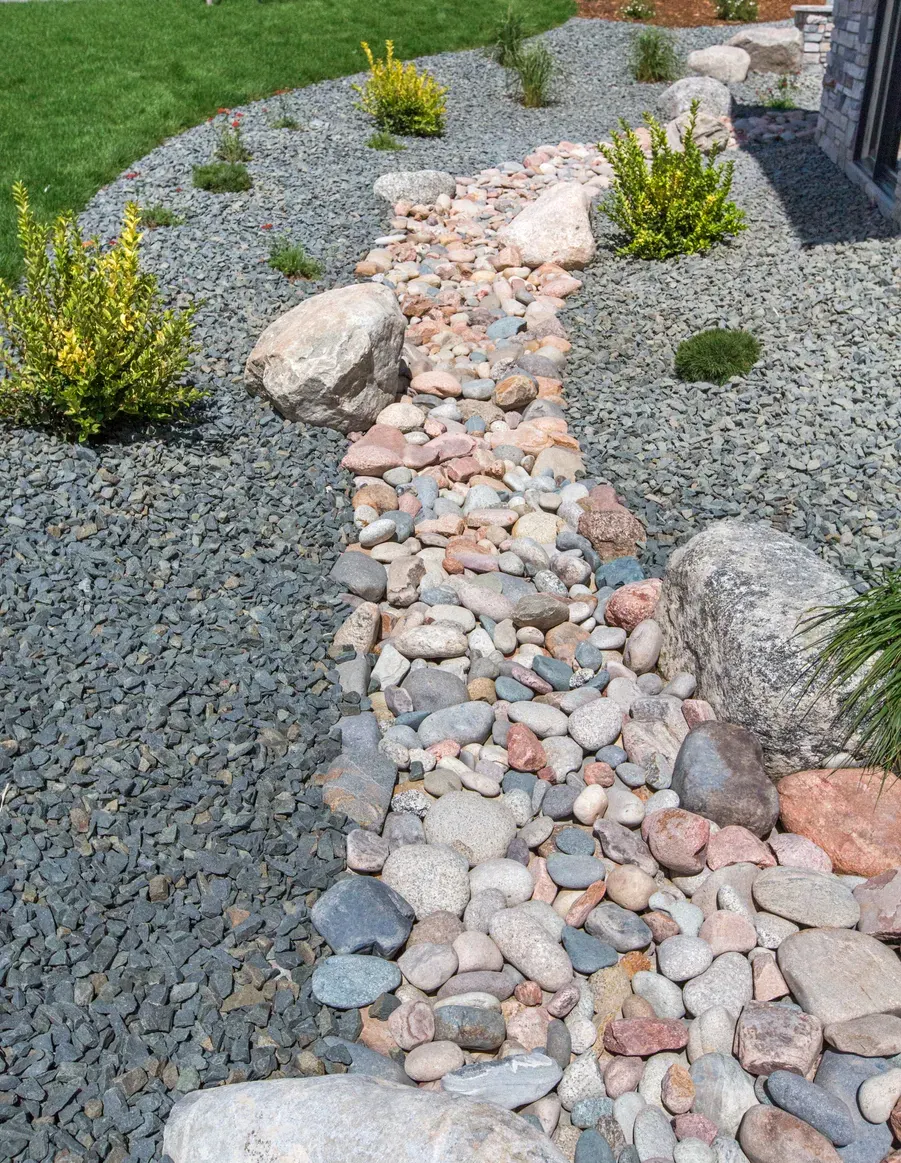
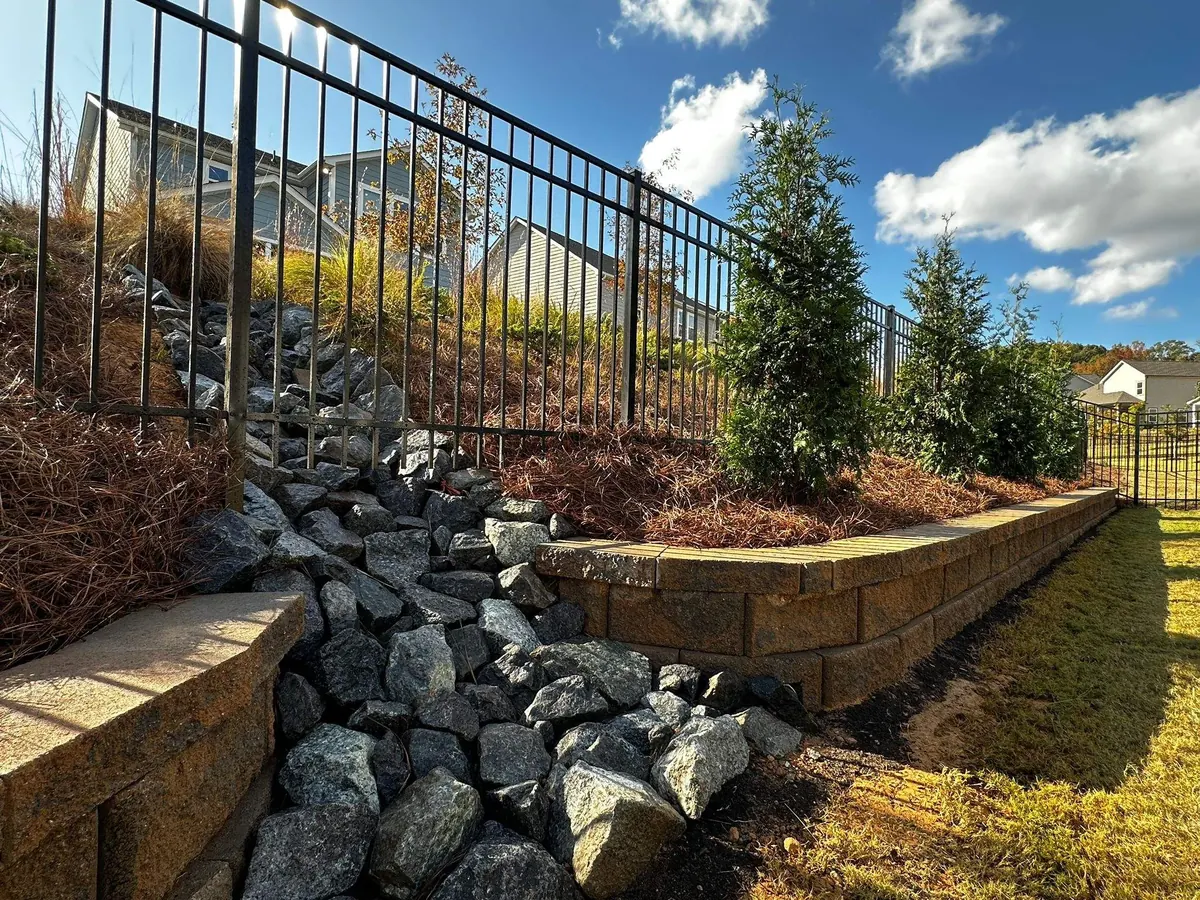
A dry creek bed does the same job with rock and boulders in a trench, and looks like a natural creek. A buried downspout extension carries gutter water under the lawn to a pop-up emitter away from the house. Regrading changes the slope so water runs off instead of toward the foundation.
What we don’t do
We fix how water moves across the yard and away from the house. Foundation waterproofing is a different trade.
Common problems and fixes
| What you see | Likely fix |
|---|---|
| Puddles where a downspout empties | Buried downspout extension with a pop-up emitter |
| Spongy or standing water in the lawn | French drain, regrading, or both |
| Runoff cutting down a slope | Dry creek bed |
| Water running toward the house | Regrading the yard away from the foundation |