








RK Preferred fixes yard drainage in Indian Trail and Wesley Chapel, where red clay, builder grading and heavy summer storms leave many yards with standing water or runoff toward the house. Drainage jobs usually skip the design: Rob looks at where the water comes from and you get a direct quote.
Why Indian Trail yards hold water
Red clay barely absorbs water, so after a storm it sits on the surface or runs wherever the ground slopes. Many homes here also have downspouts that empty at the foundation and yards graded quickly during construction, so water ends up against the house or pooling in the middle of the lawn.
The fixes we use most here
| Problem | Fix |
|---|---|
| Puddles at the downspouts | Buried downspout extension to a pop-up emitter |
| Lawn that stays soggy | French drain, regrading, or both |
| Water running toward the house | Regrading the yard away from the foundation |
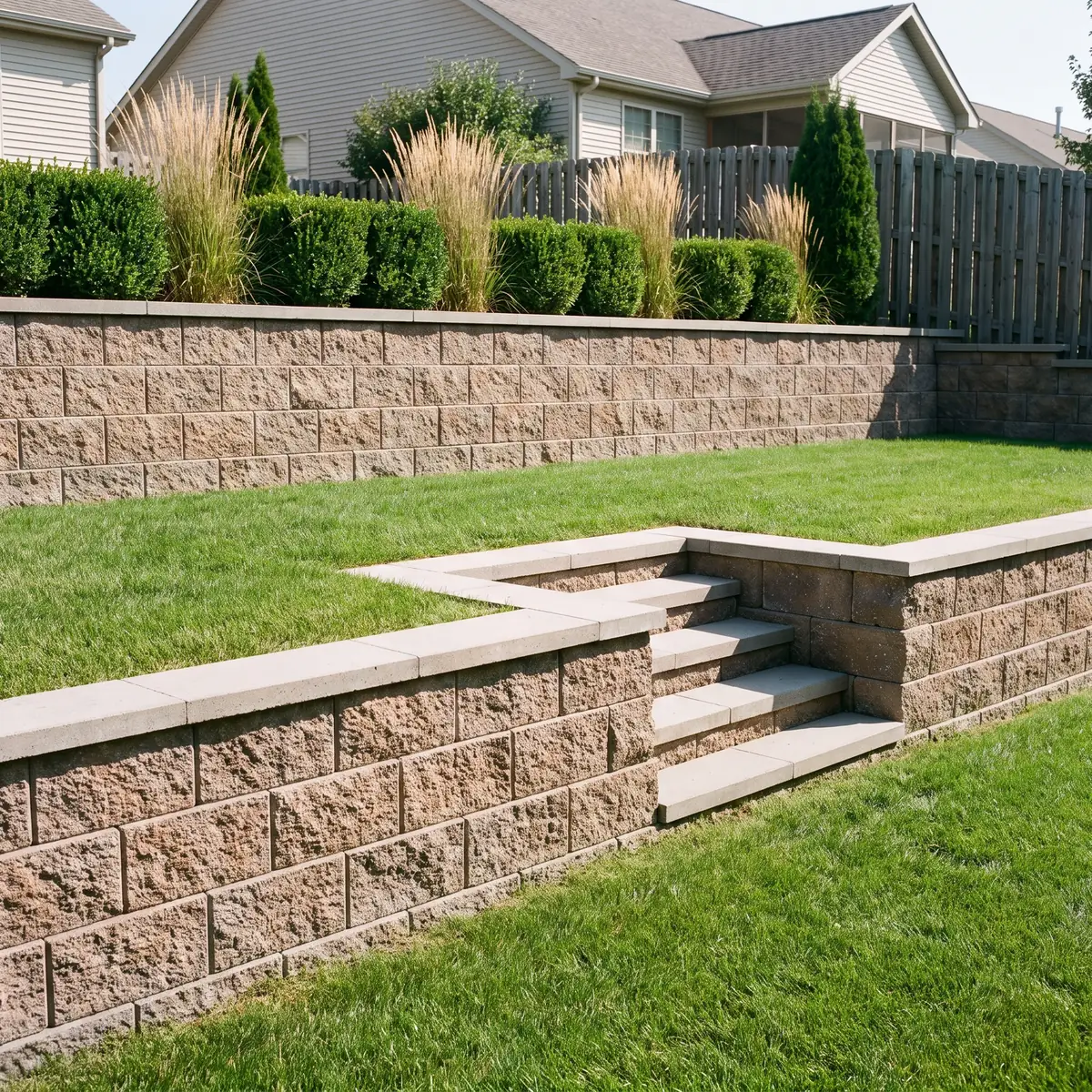
| Runoff cutting down a back slope | Dry creek bed, sometimes with a retaining wall |
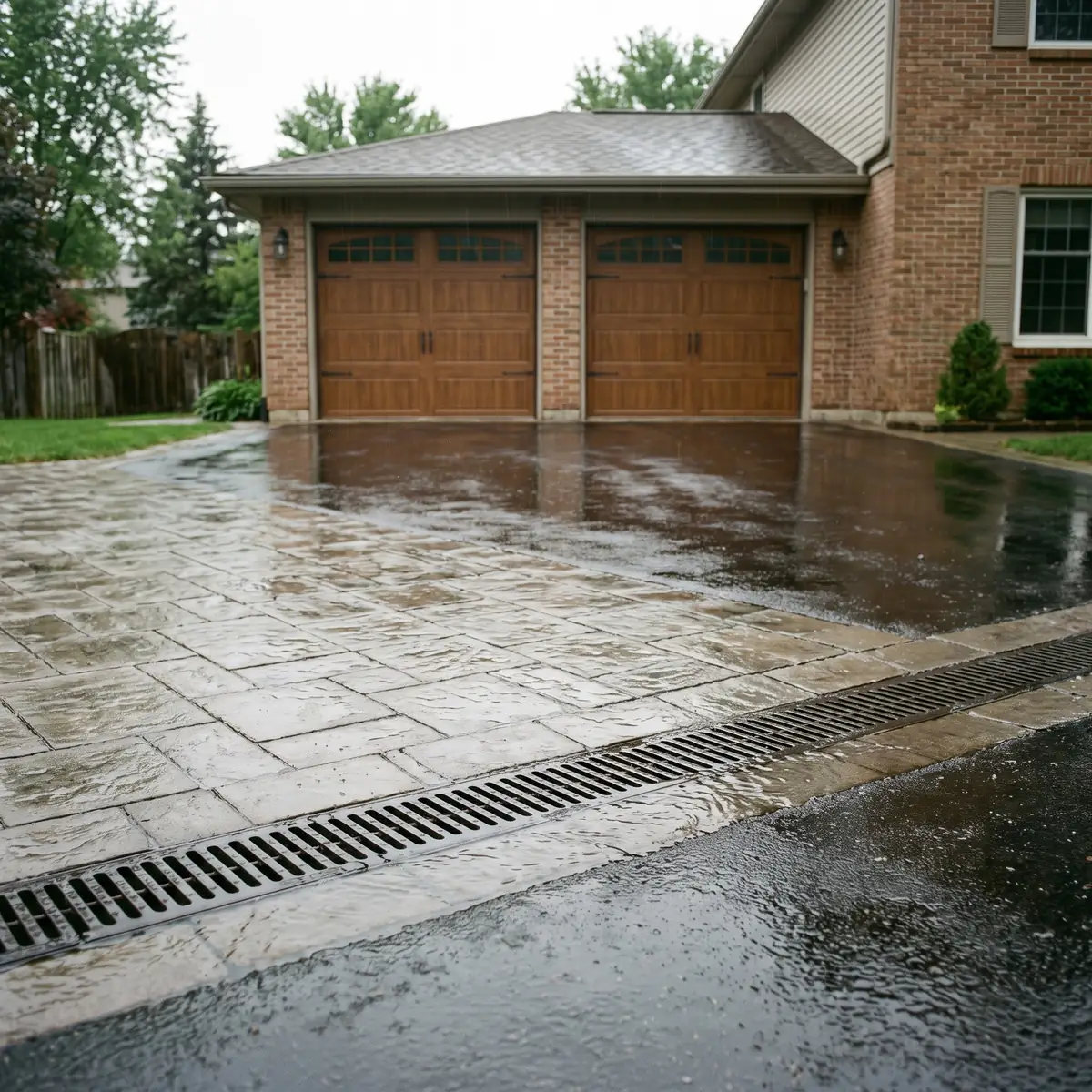
A French drain is perforated pipe in a gravel-filled trench that carries water to a set spot. Our crews often use laser-guided equipment to hold the grade along the run. A dry creek bed does the same job with rock and boulders and looks like a natural creek.
Start at the gutters
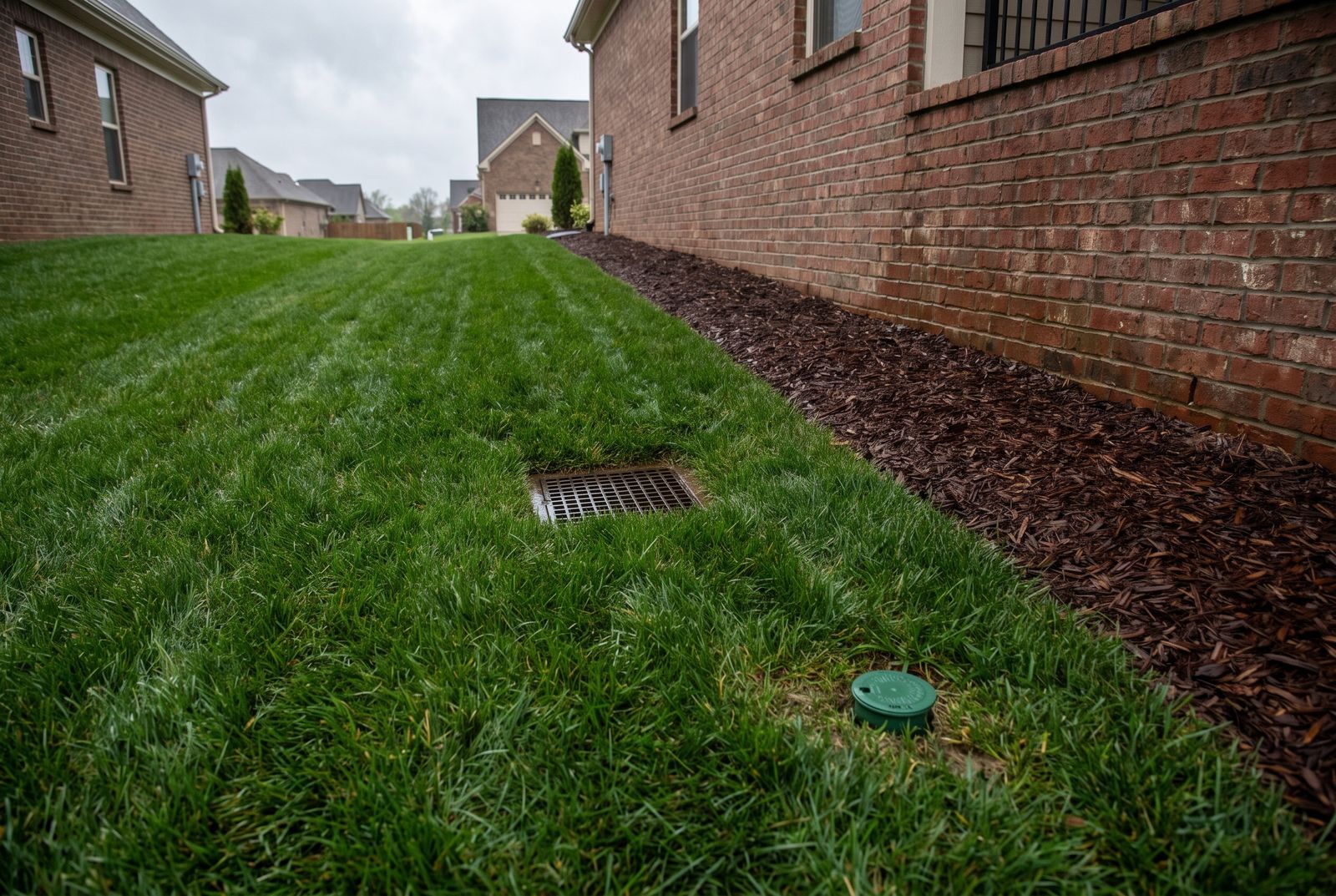
Heavy summer thunderstorms drop a lot of rain in a short time, and clay can’t take it in. On most Indian Trail homes, the first thing we check is where each downspout empties. Moving that water under the lawn to a pop-up emitter well away from the house fixes a surprising share of wet yards on its own, and it’s often the first step before regrading or a French drain.
Drainage before a patio
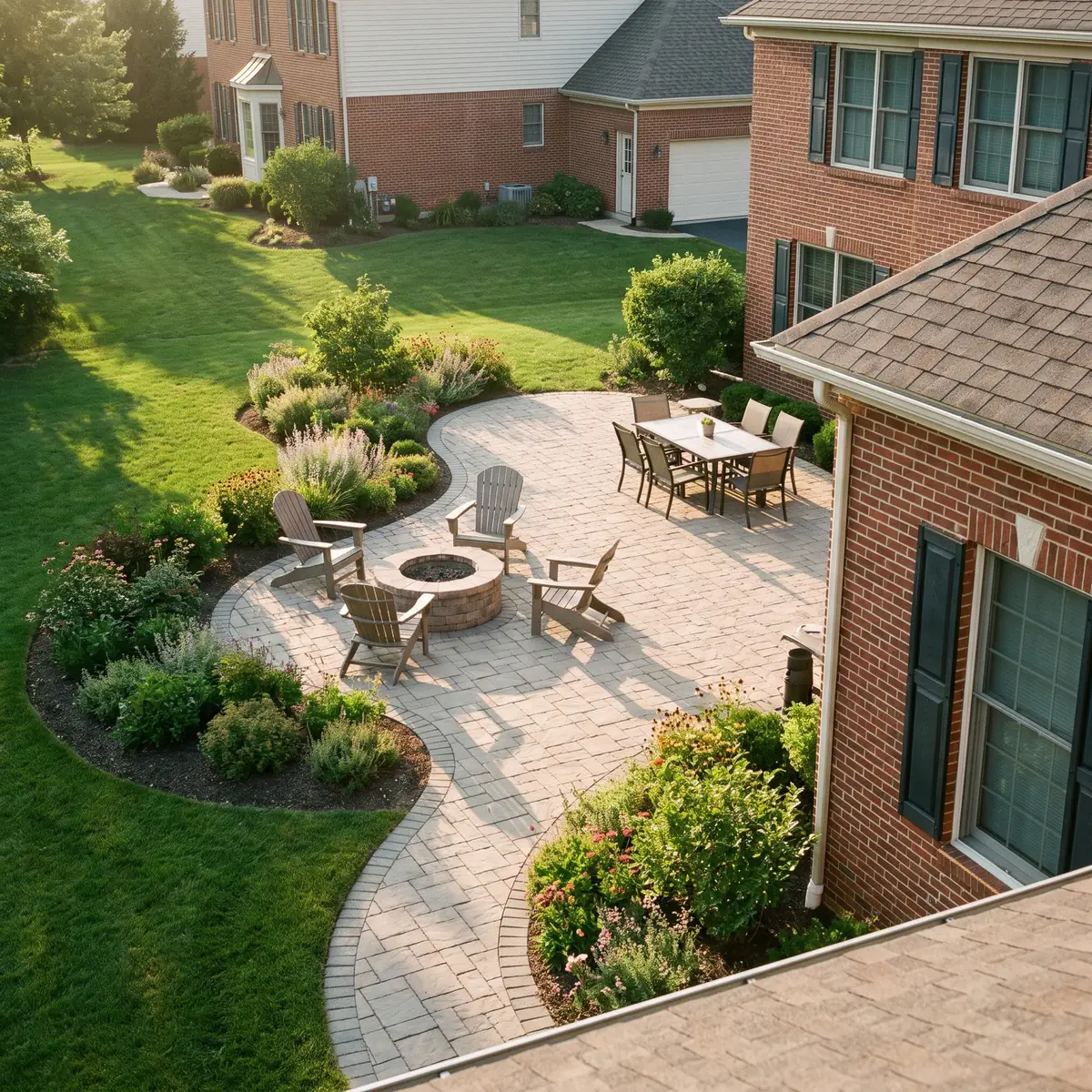
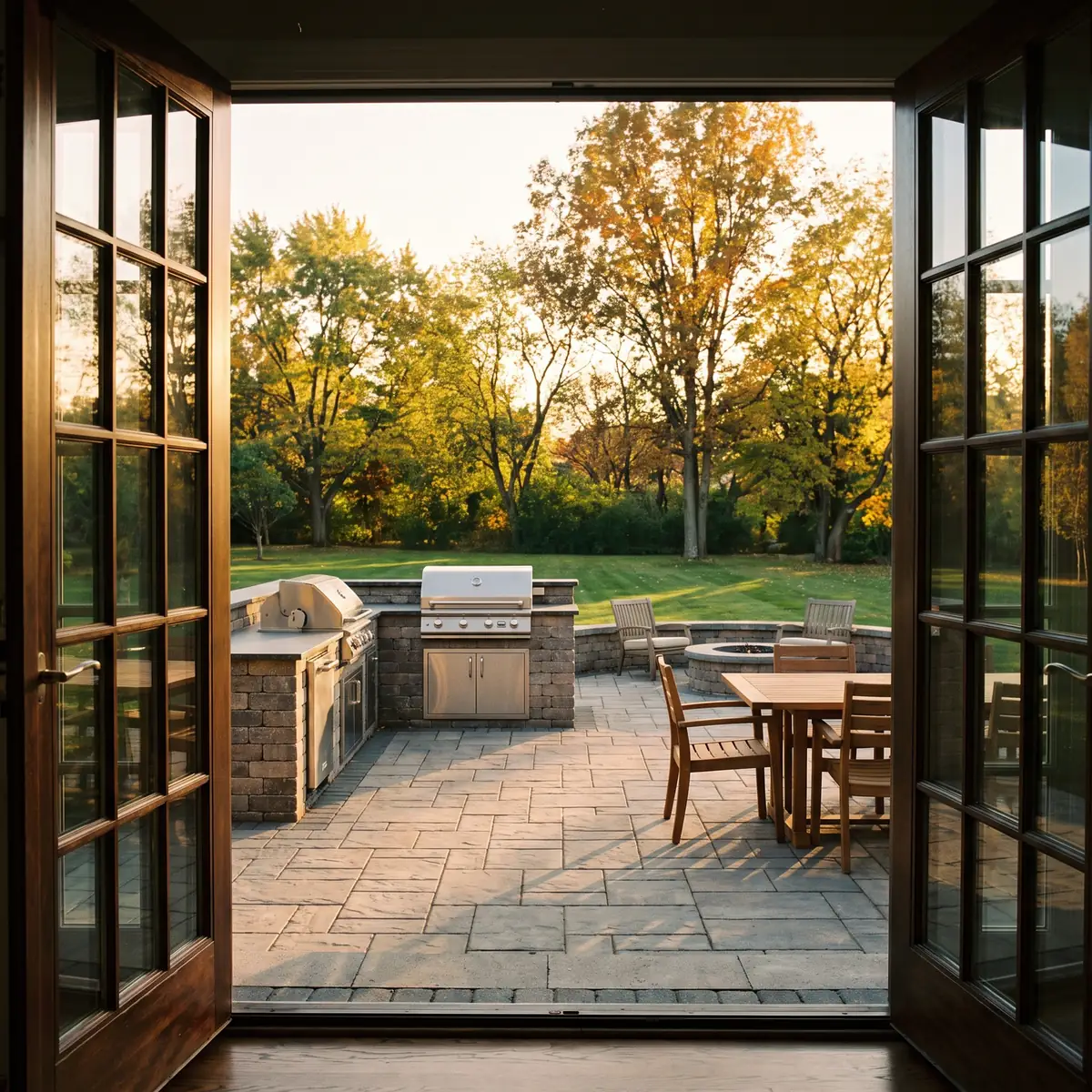
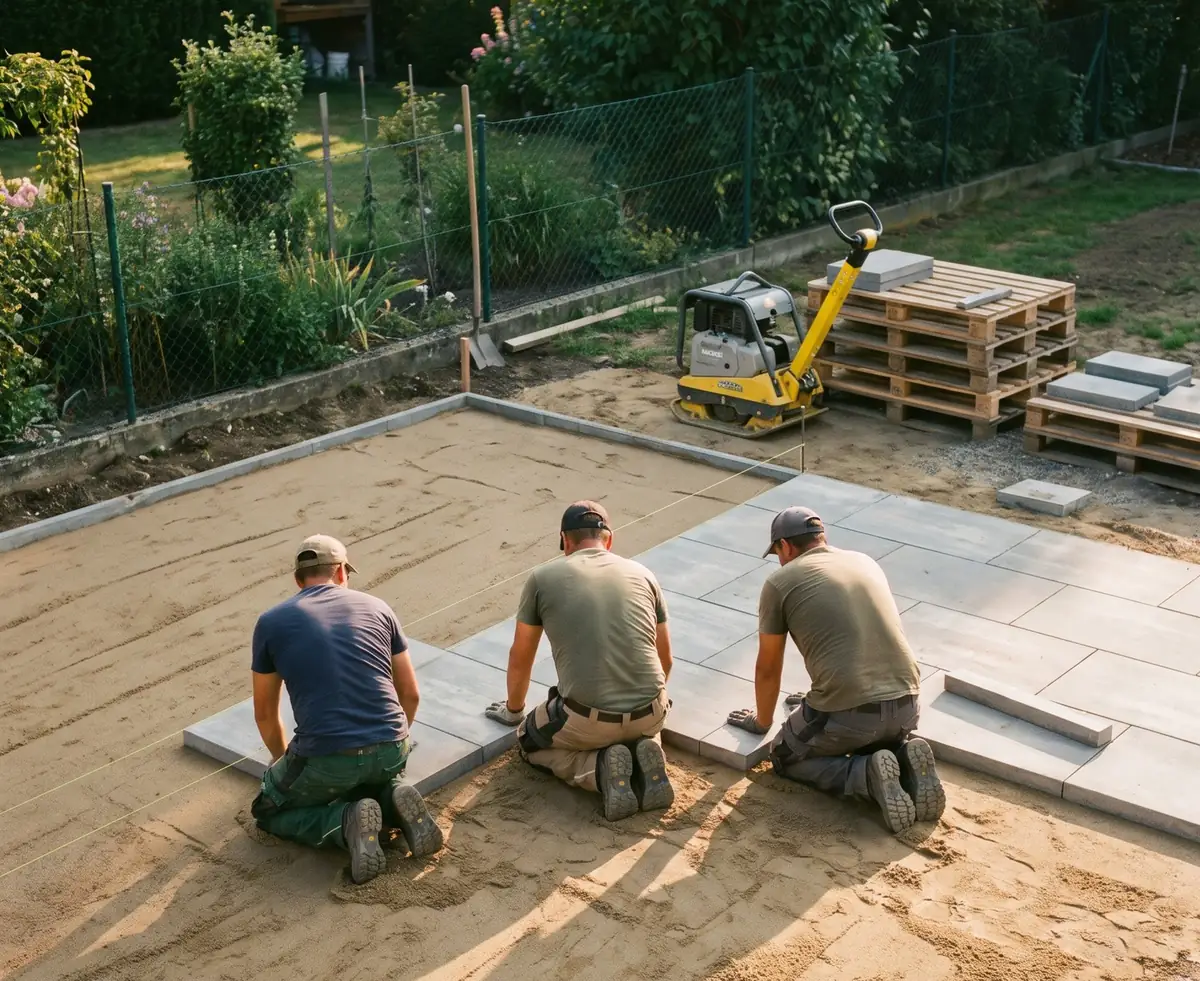
If you’re planning a patio, fix the water first. A patio built where water already collects will settle or hold puddles. We often combine a drainage fix with a new paver patio or a retaining wall on a sloped lot.
What we don’t do
We fix how water moves across the yard and away from the house. Foundation waterproofing is a different trade. See water pooling by your foundation for more.
Questions homeowners ask
How soon can you look at it?
We’re based in Indian Trail, so the site visit is easy to schedule.
Do I need to wait for rain?
No, but photos or video from the last storm help us see where the water goes.