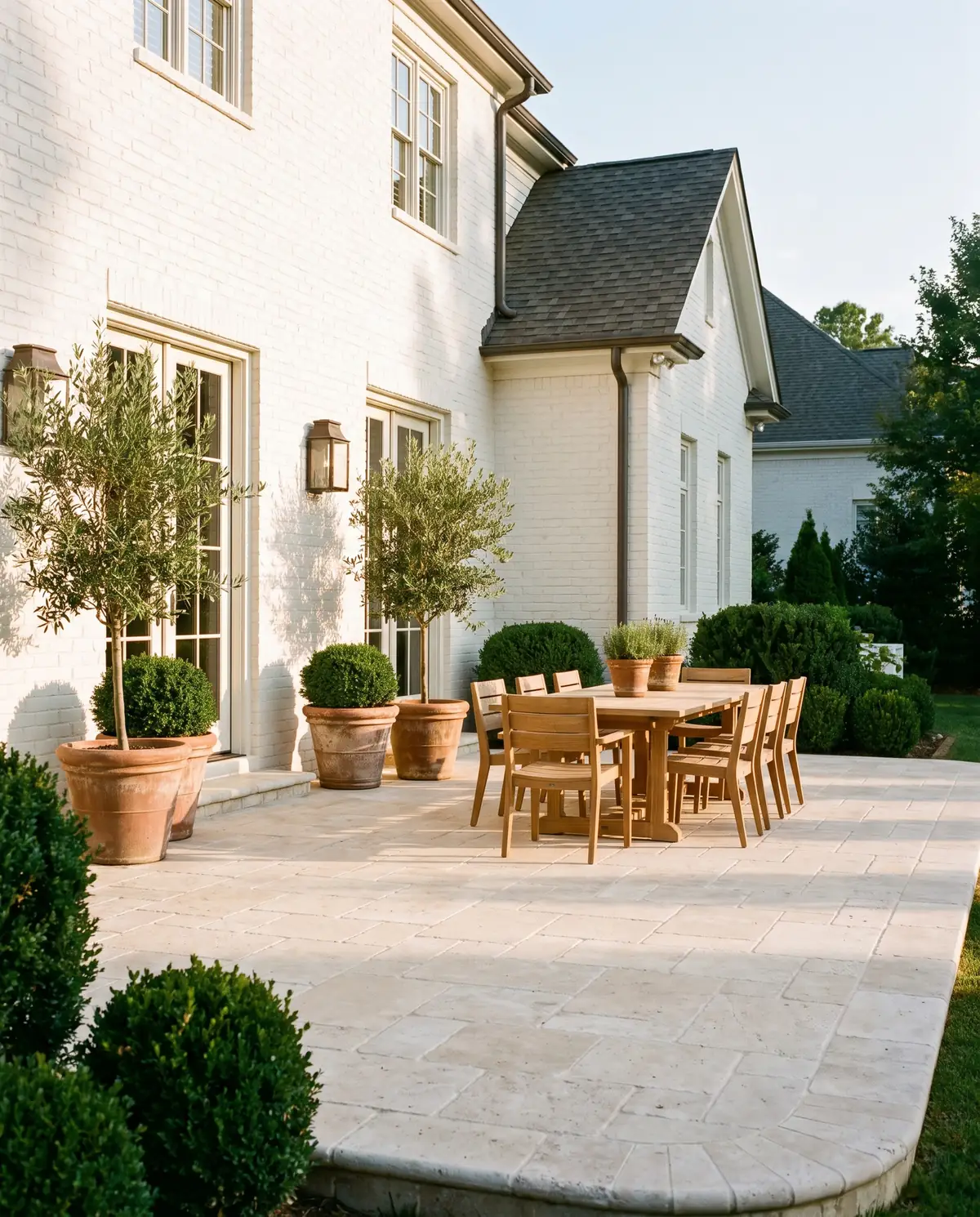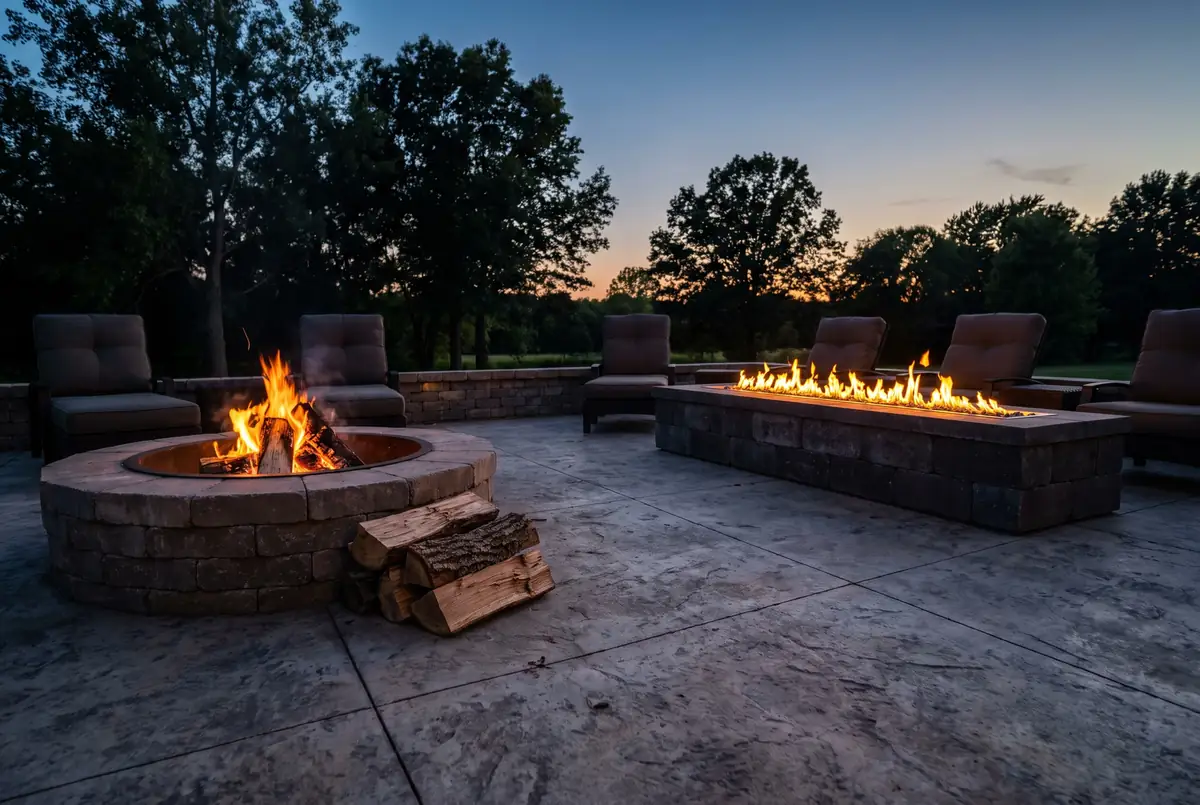

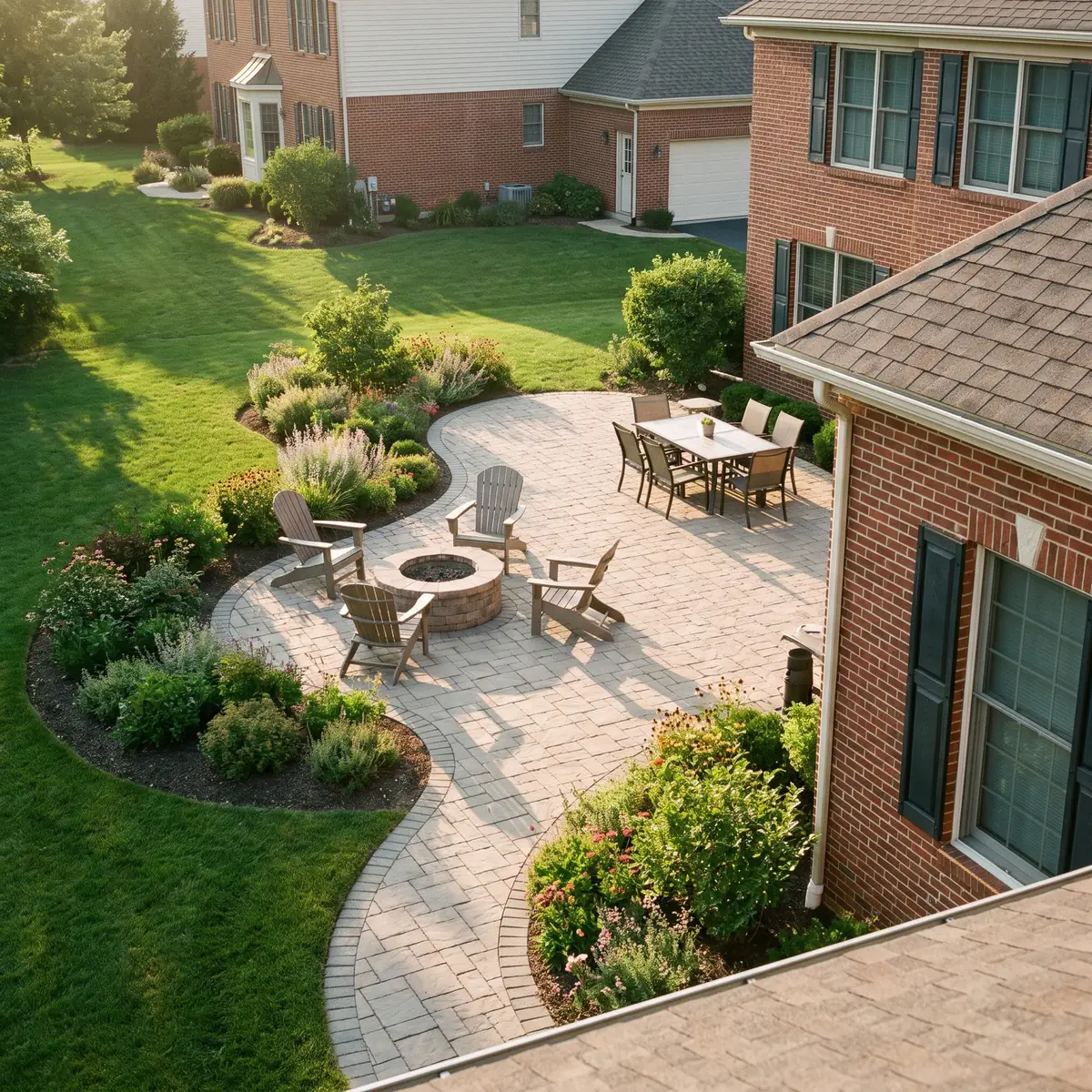

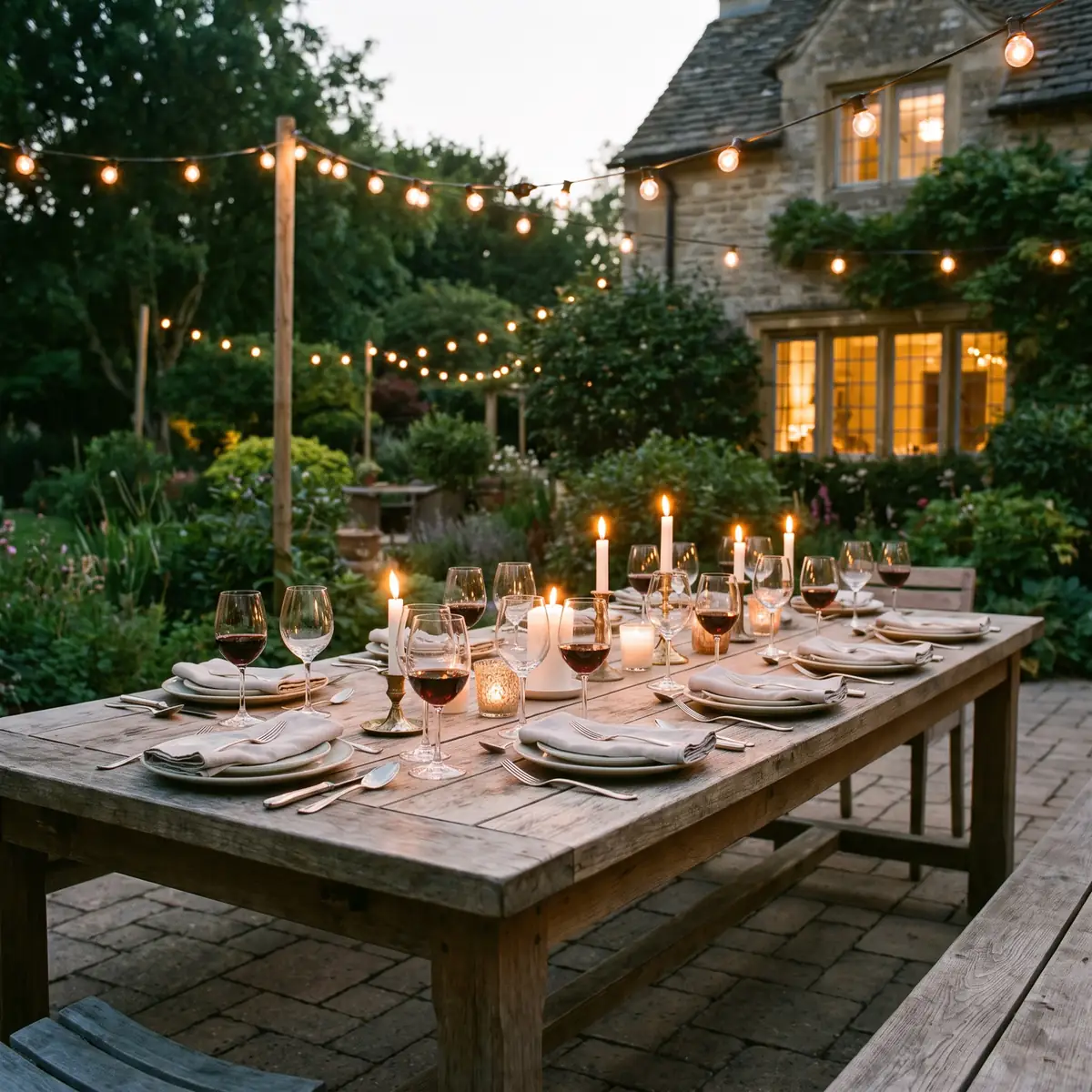

On Charlotte’s red clay, a paver patio usually holds up better than a poured slab. Clay swells when it’s wet and shrinks when it dries, and a single slab can’t move with it, so it cracks. Pavers are separate units on a compacted stone base: the joints let the surface flex, and a damaged section can be lifted and relaid. Concrete costs less up front and suits a simple, flat pad.
Why concrete cracks here
Concrete is strong but rigid. Contractors cut control joints so it cracks in straight lines instead of random ones, but on soil that moves with the seasons, most slabs crack somewhere eventually. A crack can be patched, but the patch rarely matches, and a sunken corner usually means cutting out and repouring a section.
Why pavers handle movement better
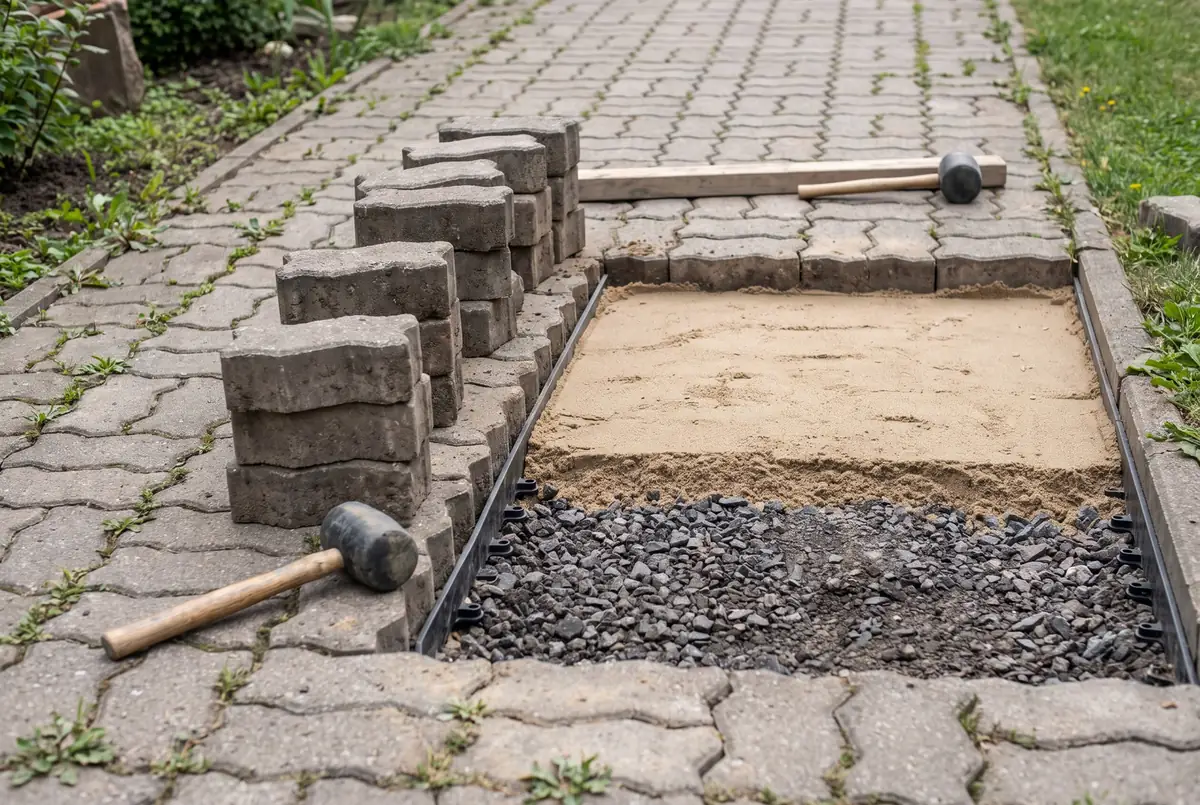
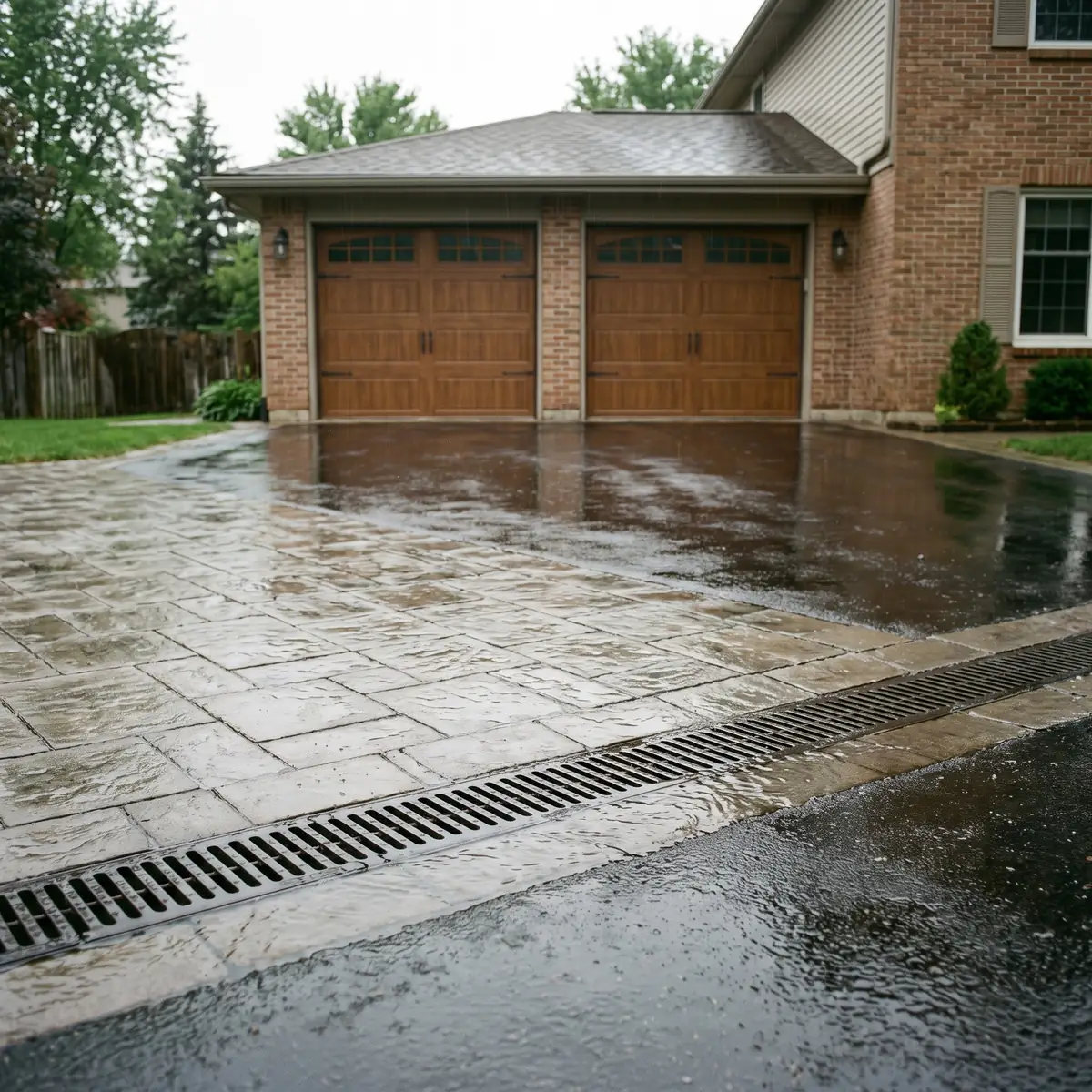
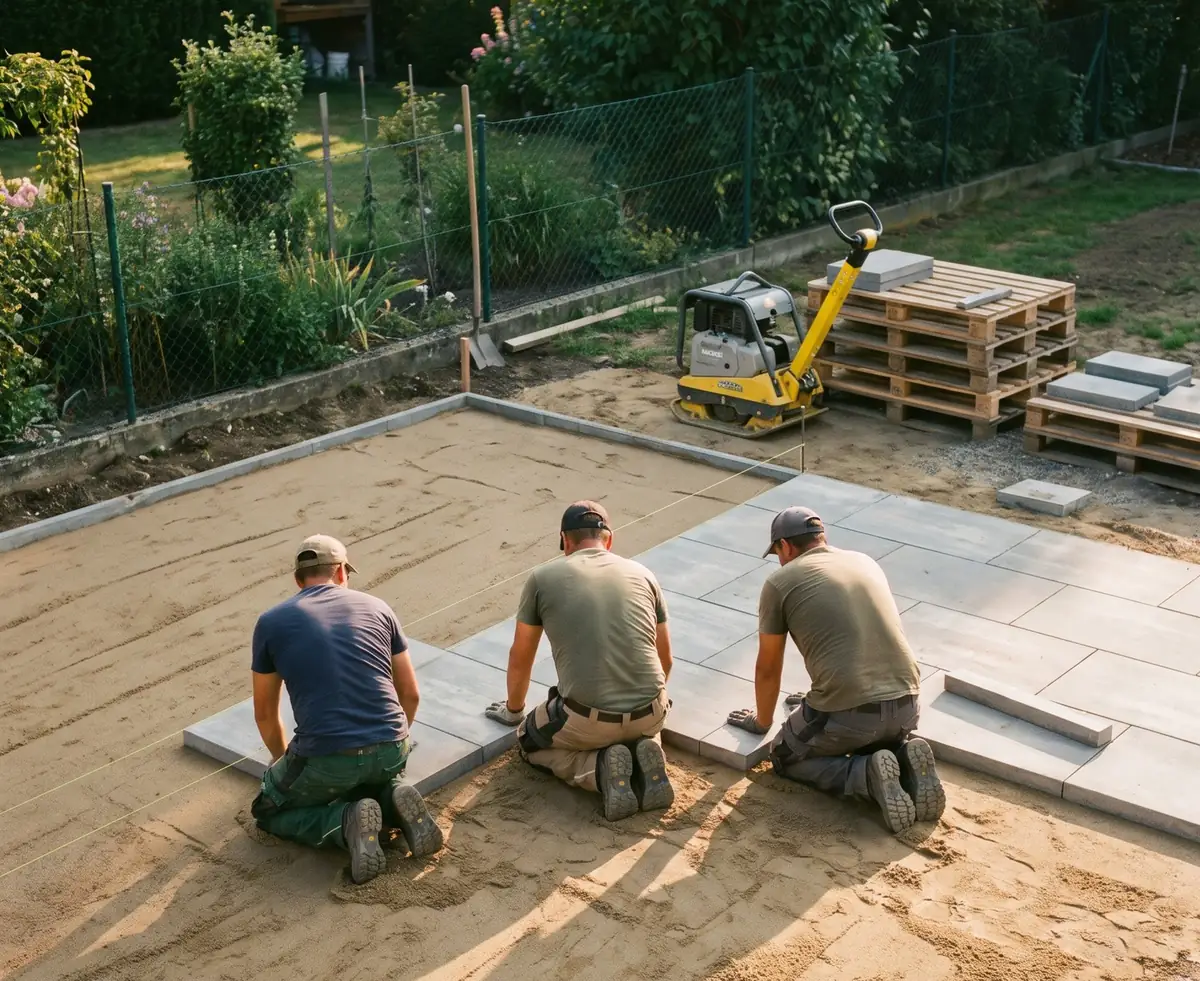
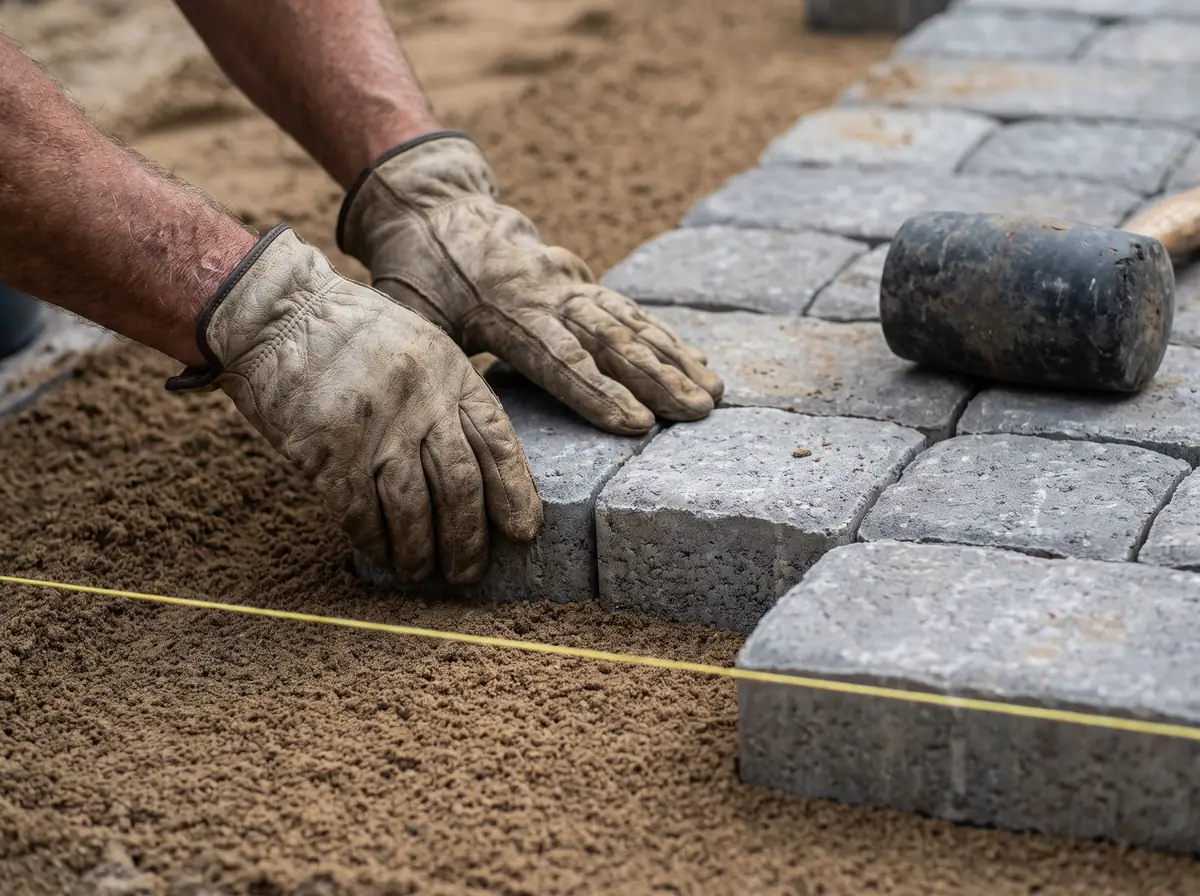
A paver patio is built in layers: excavated soil, a compacted crushed-stone base, a thin bedding layer, the pavers, and sand in the joints. The surface is pitched so water runs away from the house, and an edge restraint keeps the border from drifting. Because every paver is a separate piece, small movement shows up as a slightly uneven joint, not a crack.
Manufactured pavers are also dense. Unilock says its pavers are made to deliver up to four times the strength of conventional poured concrete (Unilock).
Repairs and changes later
This is the biggest practical difference. If a section of pavers settles, or a utility line has to go under the patio, the pavers come up and go back down. A slab has to be cut. Pavers also make later additions easier, such as a seat wall, a fire pit or an extension toward the lawn.
Looks
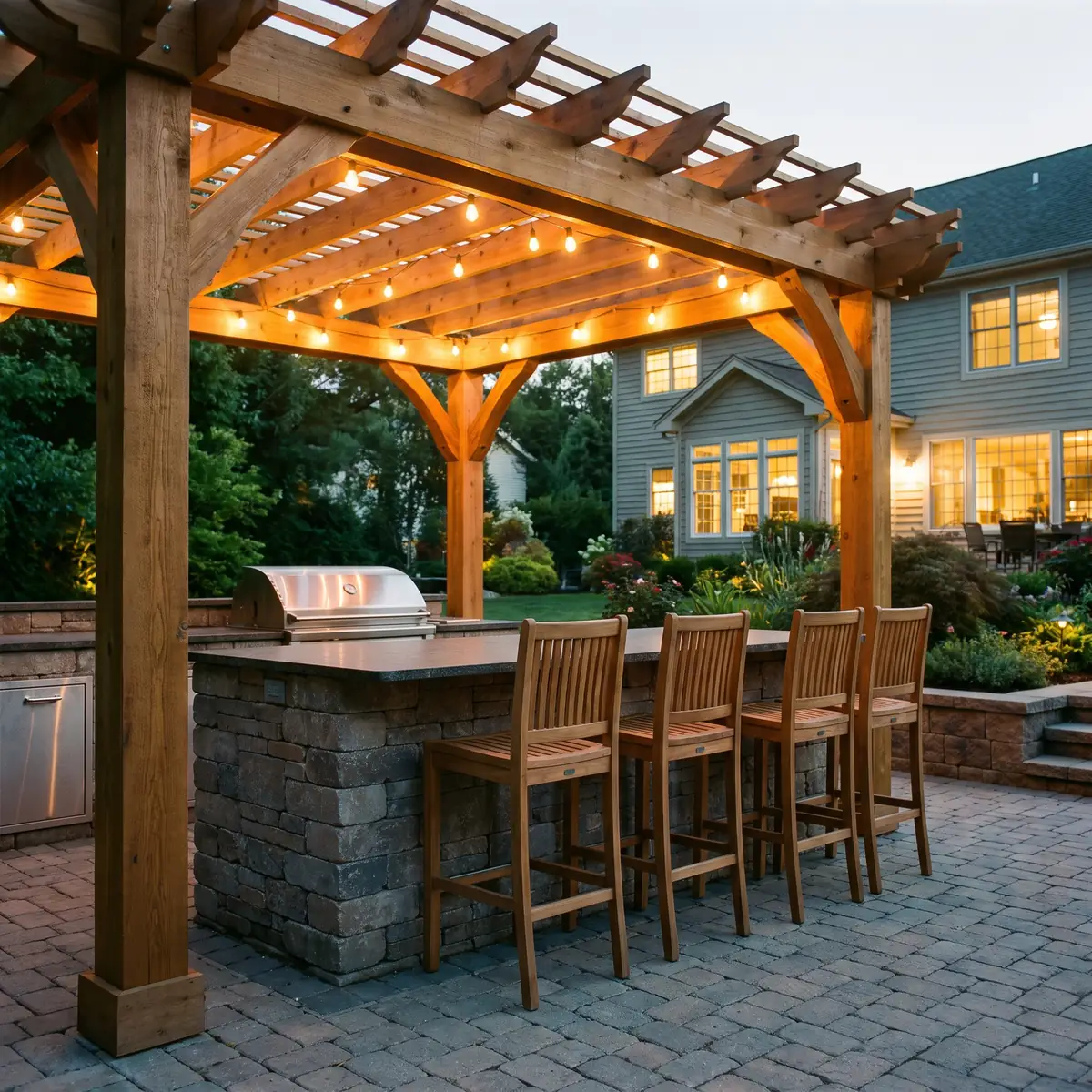
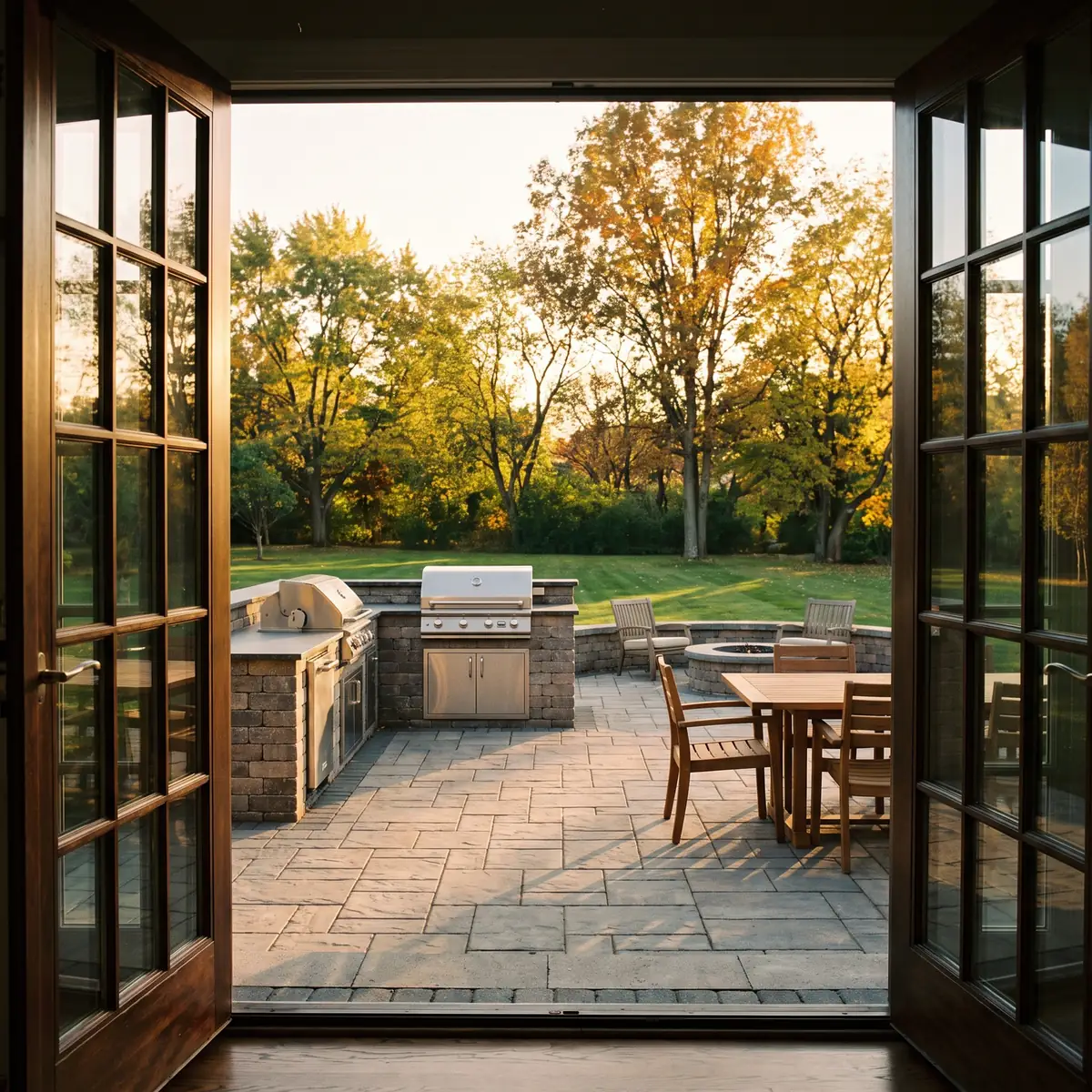
Concrete can be broom-finished, colored or stamped. Pavers come in far more shapes, colors and textures, and a border in a second color frames the patio. Most of RK’s patios are Unilock: Beacon Hill Smooth for a clean, large-format look, Treo for smaller modern units, and Copthorne for an old-world street look. We also install Techo-Bloc and Belgard pavers.
Pavers and concrete side by side
| Paver patio | Poured concrete | |
|---|---|---|
| On clay that moves | Joints flex; units can be relaid | Prone to cracking |
| Repairs | Lift and relay the section | Patch, or cut and repour |
| Looks | Many shapes, colors, borders | Broom, color or stamp |
| Up-front cost | Higher | Lower |
| Later additions | Easy to extend or tie into | Harder to match |
Where RK uses concrete
RK builds paver and travertine patios. We pour concrete only as part of a bigger project, not as a standalone slab.
Questions homeowners ask
Will weeds grow between pavers?
Joints filled with polymeric sand resist weeds far better than plain sand, and an occasional sweep keeps them tight.
Can pavers go over an existing slab?
Sometimes, if the slab is sound and the added height works at the doors and steps. It depends on the slab, so we check at the site visit.
How do I see what it would look like?
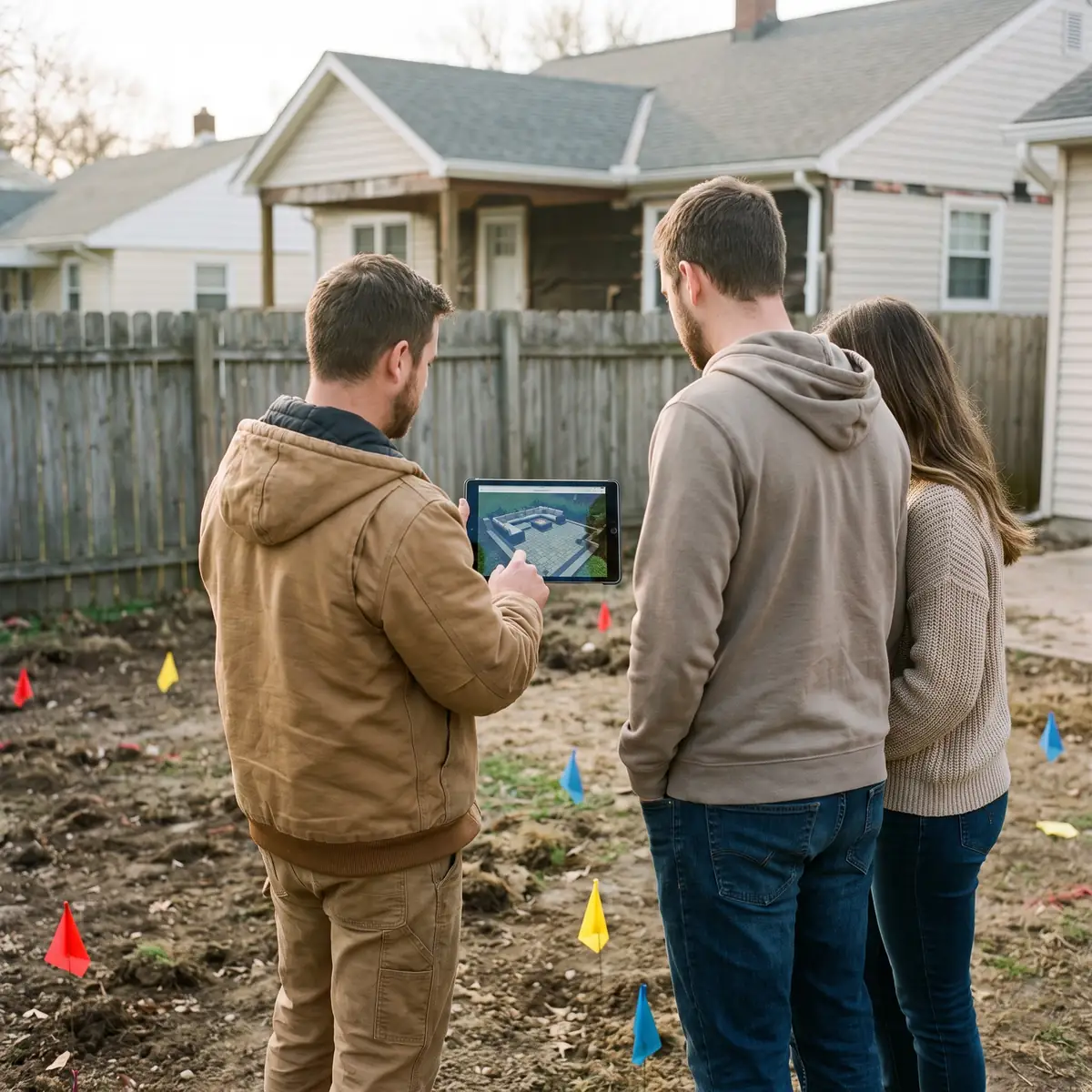
On a design project, the 3D rendering shows the pavers on your own house before anything is built.